Skip to content

+255 785 738 788
info@zoeexpeditions.com

Safari

12 Days

KARAFUU HONEYMOON SAFARI

Tour Type

Tanzania Wildlife Safari – Zanzibar Island Safari

WHERE TO GO

Tarangire National Park, Lake Manyara National Park, Serengeti National Park, Ngorongoro Crater and Zanzibar

IMPORTANT NOTE

This is only an illustration of what we do; each of our safaris is tailor-made. Contact our team of specialists right away to begin creating the ideal safari for you.
About this Tour

This safari will unveil all of the Tanzania’s best destinations, in and out. The Northern Circuit of the Tanzania being the motherland during this safari, you will visit the Tarangire National Park, Lake Manyara National Park, Ngorongoro Conservation Area and the Great Serengeti. 

After enjoying a lifetime wildlife experience on the mainland of Tanzania, you will take off to Zanzibar for four nights and tree days where you will enjoy the tranquil Zanzibar beach holiday before your safari comes to an end.

Your Trip’s Roadmap

Kilimanjaro International Airport Pick Up to Arusha

On your arrival, one of our staff members will pick you from the Kilimanjaro International Airport and take you to your booked hotel, where you will get a short briefing about the tour.  We believe that you will enjoy your stay here and hope that your safari with Zoe will exceeds your expectations.

Day 1
Arusha To Tarangire National Park

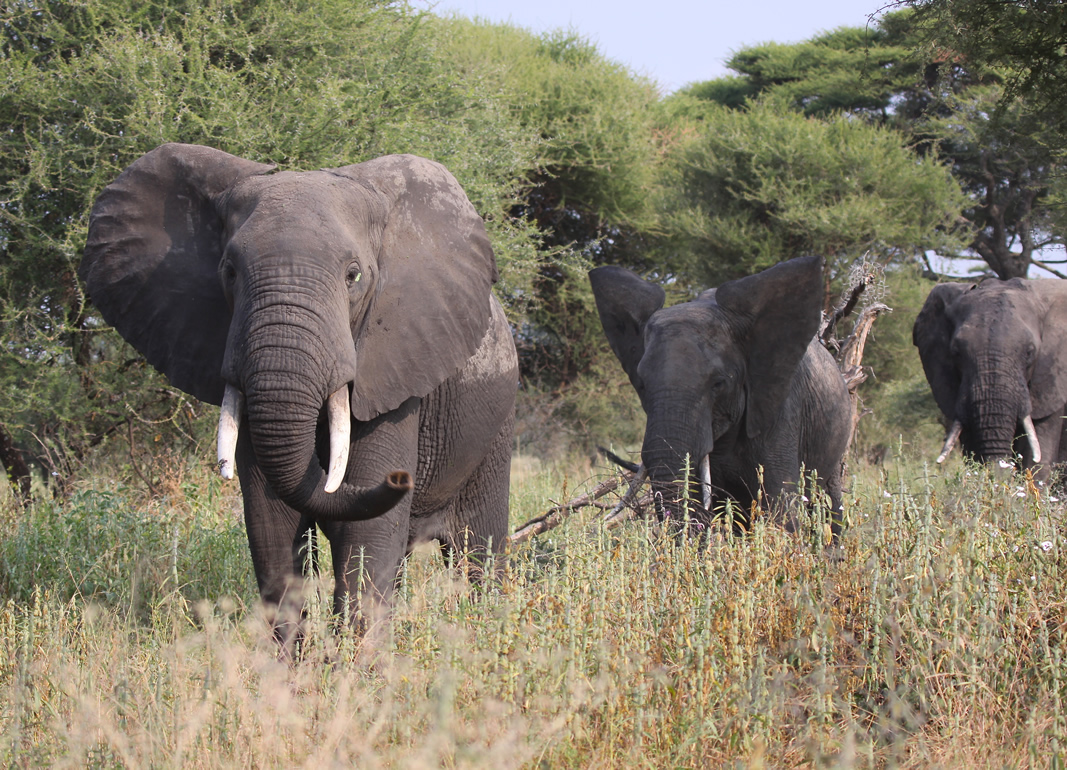
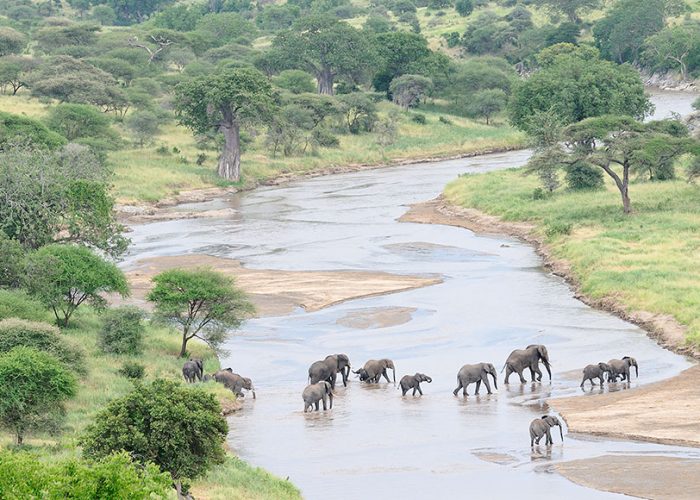
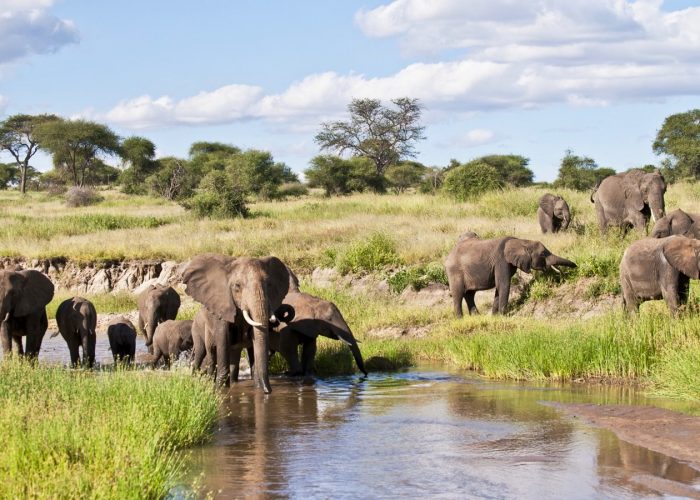
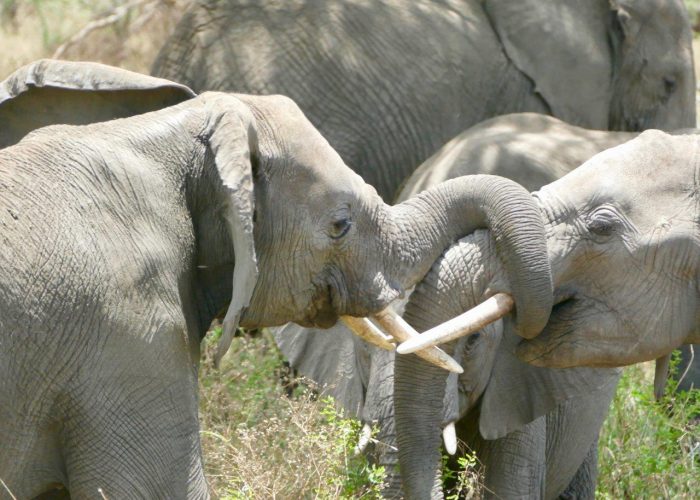
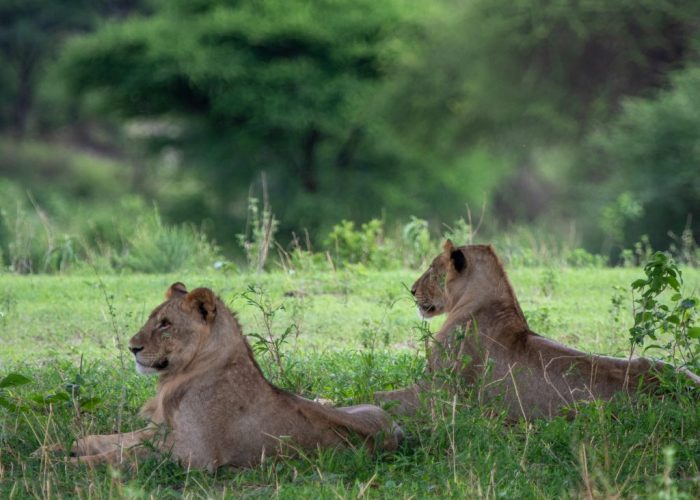
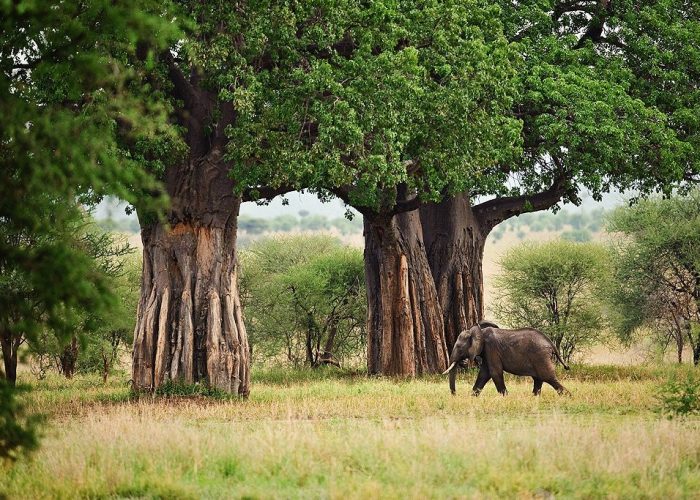
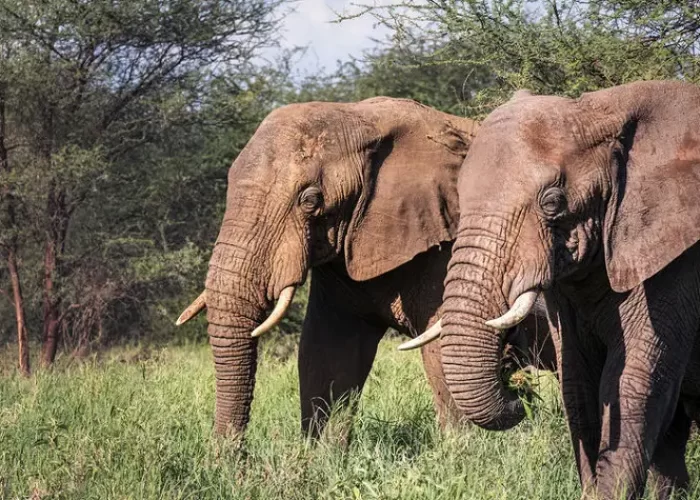
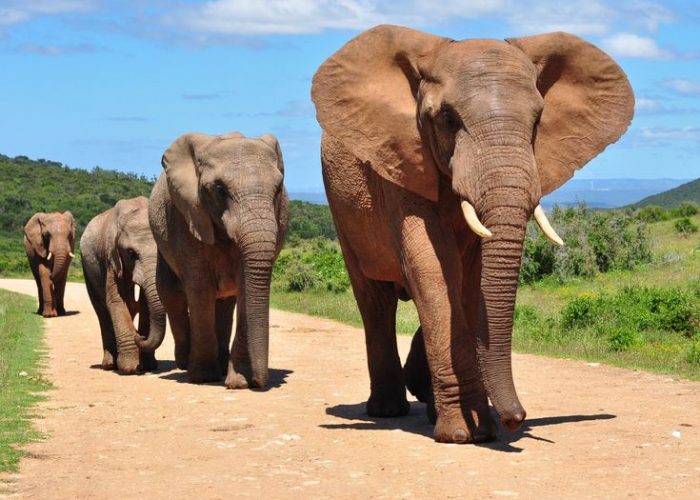
In the morning after you have taken your breakfast at around 6:00 am, your driver guide will arrive at the hotel and pick you up to begin your adventure. It takes approximately 3 hrs (150.6 km) from Arusha to get to the Tarangire gate. Popularly known as the Elephant Playground, Tarangire has a lot to offer from its magnificent variety of wild animals and its huge area. A large population of Elephants find their home here. Other animals like lion, buffalo, gazelle, zebra, and gnu are also found here.

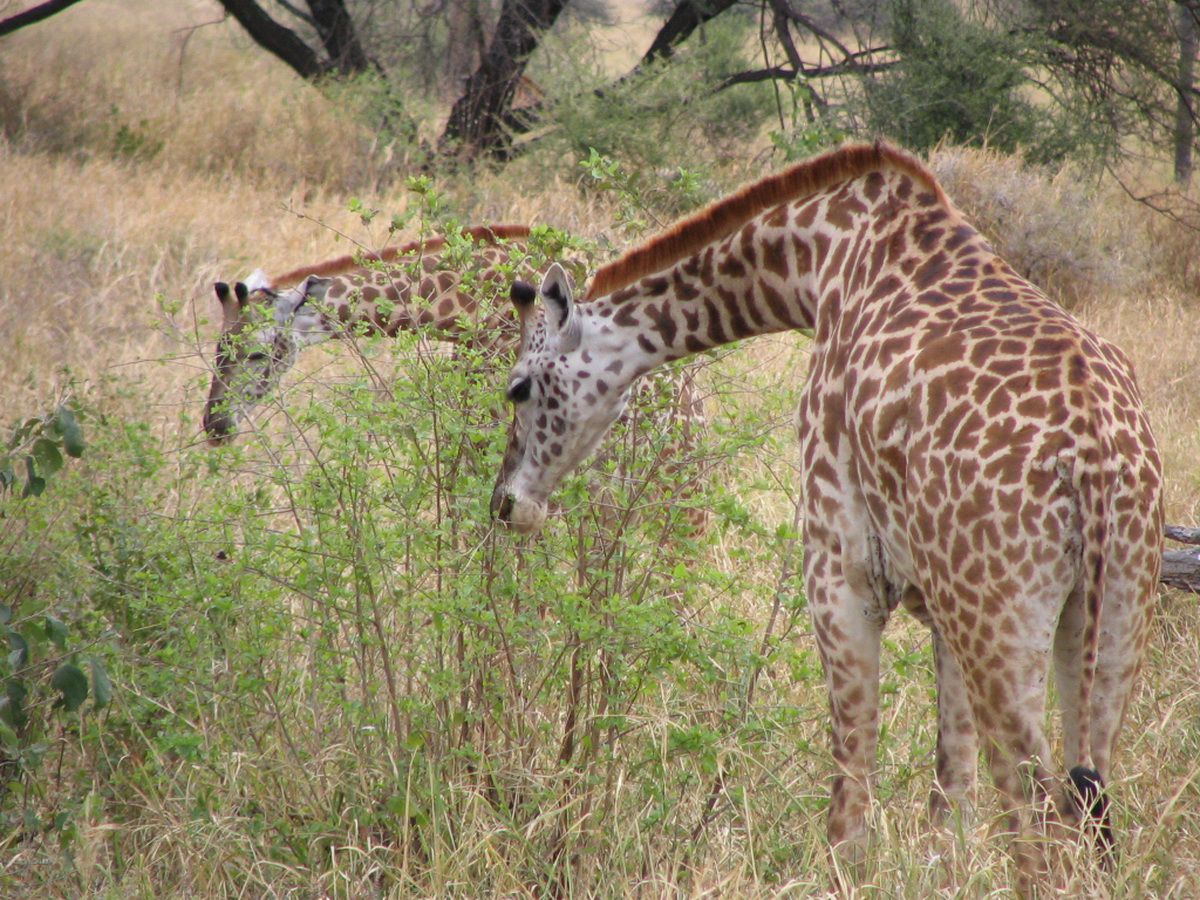
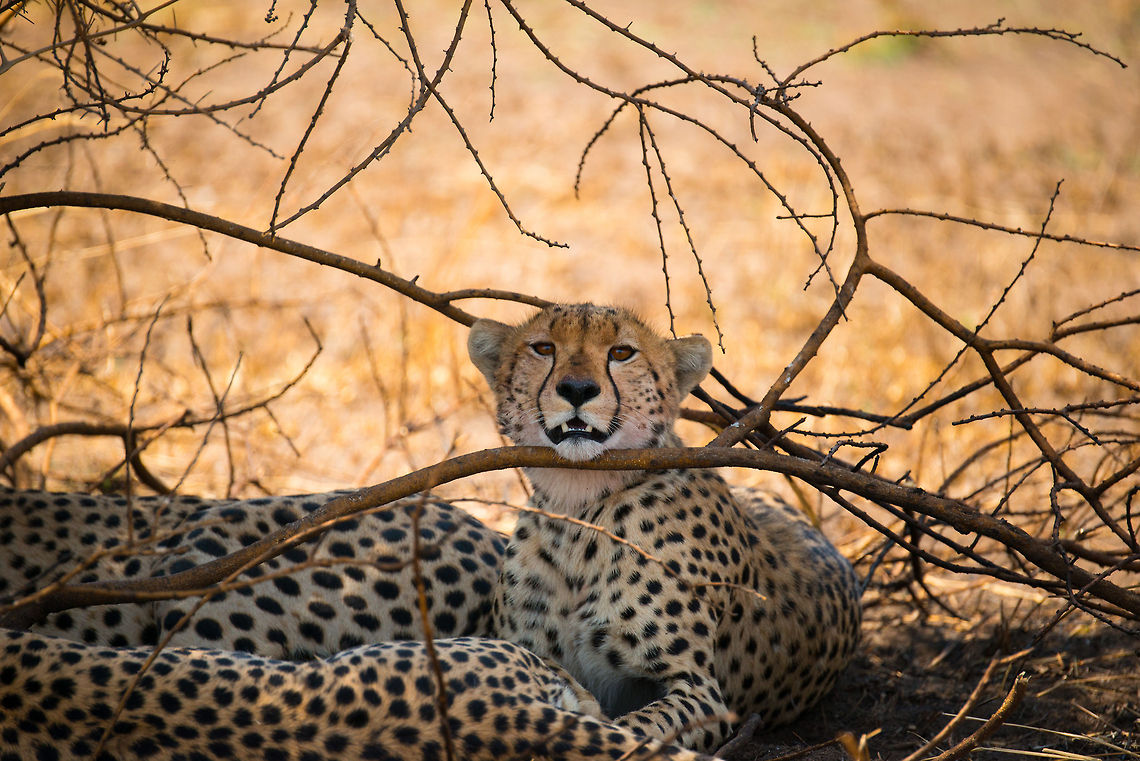
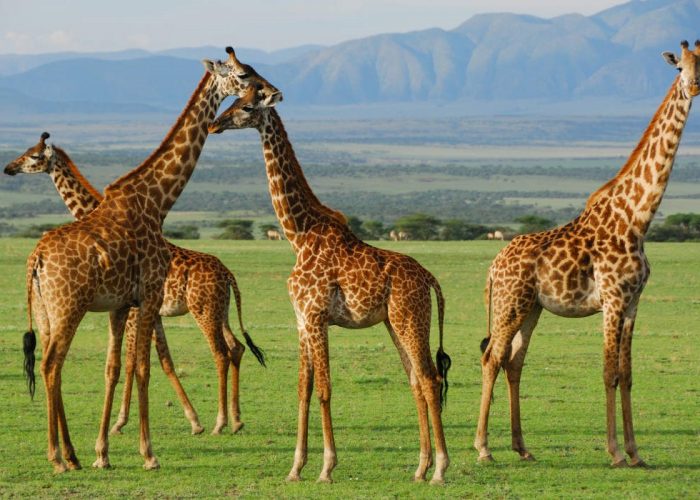
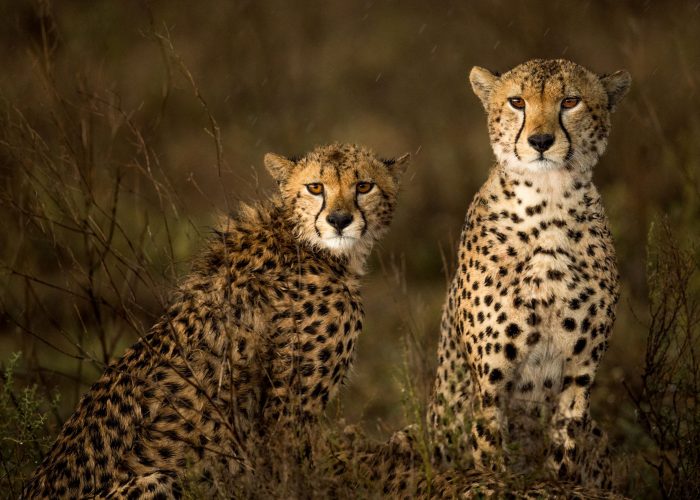
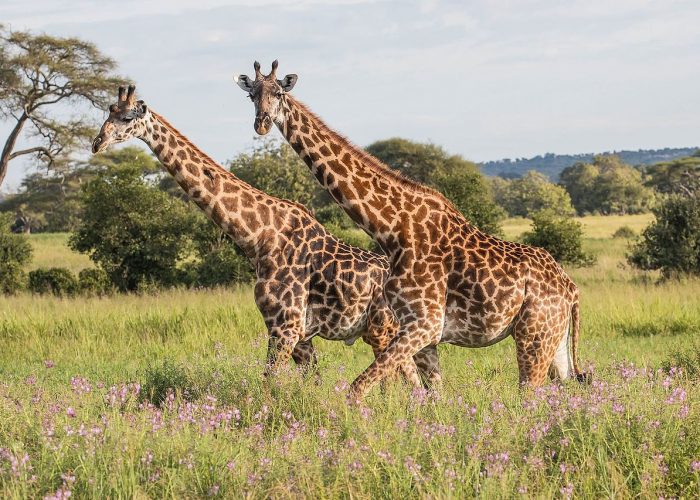
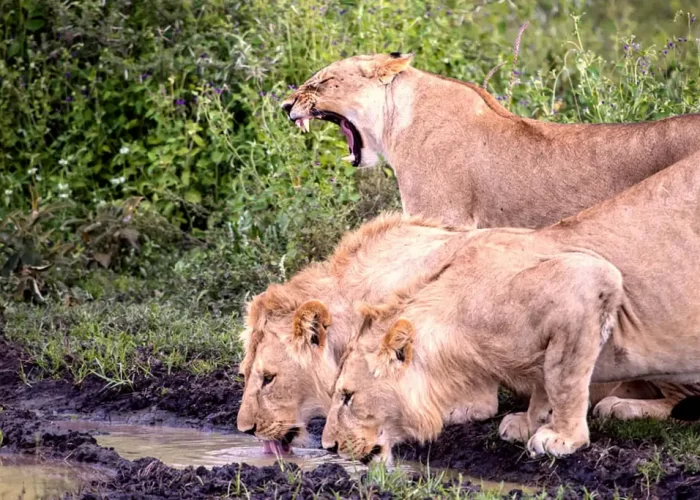
Expect to see many other mammals with amazing views like giraffes feeding from the beautiful acacia branches, zebras and gazelles hanging around together. Sometimes when lucky we get to see the pride of lions lying under trees, and if lucky enough, you might get to see cheetahs, onyx and kudu from the road stand-point.

After a long game drive and a picnic lunch, you'll head back to your accommodation, enjoy your delicious dinner, and a restful night; anticipating the best of the days ahead.

Day 2
Tarangire National Park – Lake Manyara National Park

Breakfast will be served before departing the Tarangire Area for Lake Manyara National Site, another park on the Northern Circuit. Manyara is well-known for its stunning lake and runs along the Rift Valley Escarpment. It is abundant in both flora and fauna. Relish the beauty and stillness as dressed in a pink flamingos flutter over the shallow, alkaline waters, searching for algae to munch. Over 400 different species of birds have been observed onsite, varying from bee-eaters to hornbills and all in between.

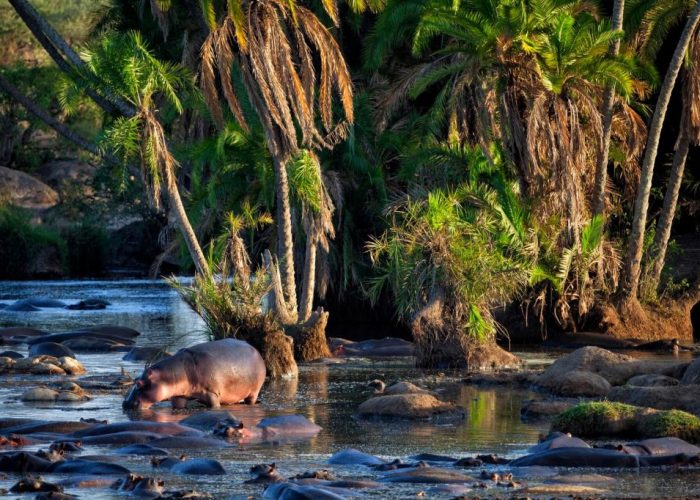
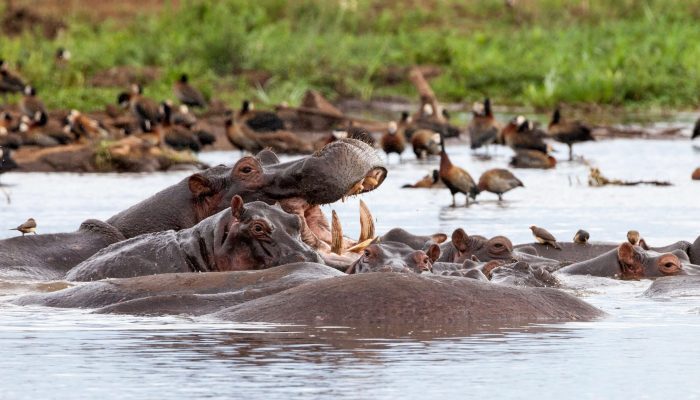
Also look out for yellow-billed storks and pink-backed pelicans if you visit between February and June. Manyara's geography is confined, yet it has a variety of ecosystems, including different woods nourished by rivers seeping from the surrounding escarpment. Monkeys abound, but keep an eye out for lions, giraffes, warthogs, and cranky Cape buffalo, all of which are proud residents of this park. When you arrive at the hippo pool, keep your nose to the ground since these large semi-aquatic creatures stink!

Day 3
Lake Manyara National Park – Serengeti National Park By Way Of Ngorongoro Conservation Area.

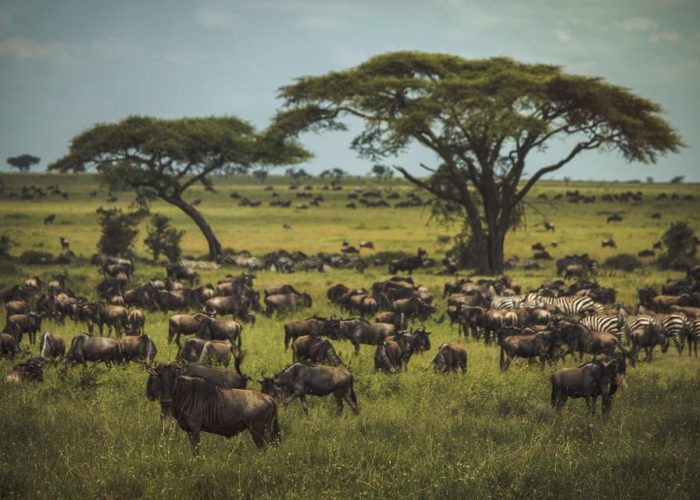
After breakfast in the early morning, your driver guide and you will head for your next destination, Tanzania's oldest and most famous Serengeti National Park. It takes up to 3 hours and 30 minutes to get here before your game drive starts. Unlike many other areas on the planet, the Serengeti is a one-of-a-kind ecosystem. The breathtaking scenery, bright shifting light, and, of course, the plethora of species that have made this their home will fascinate you. With thousands of predators – and hundreds of thousands of prey – it is no surprise there is always something fascinating going on in the animal communities.

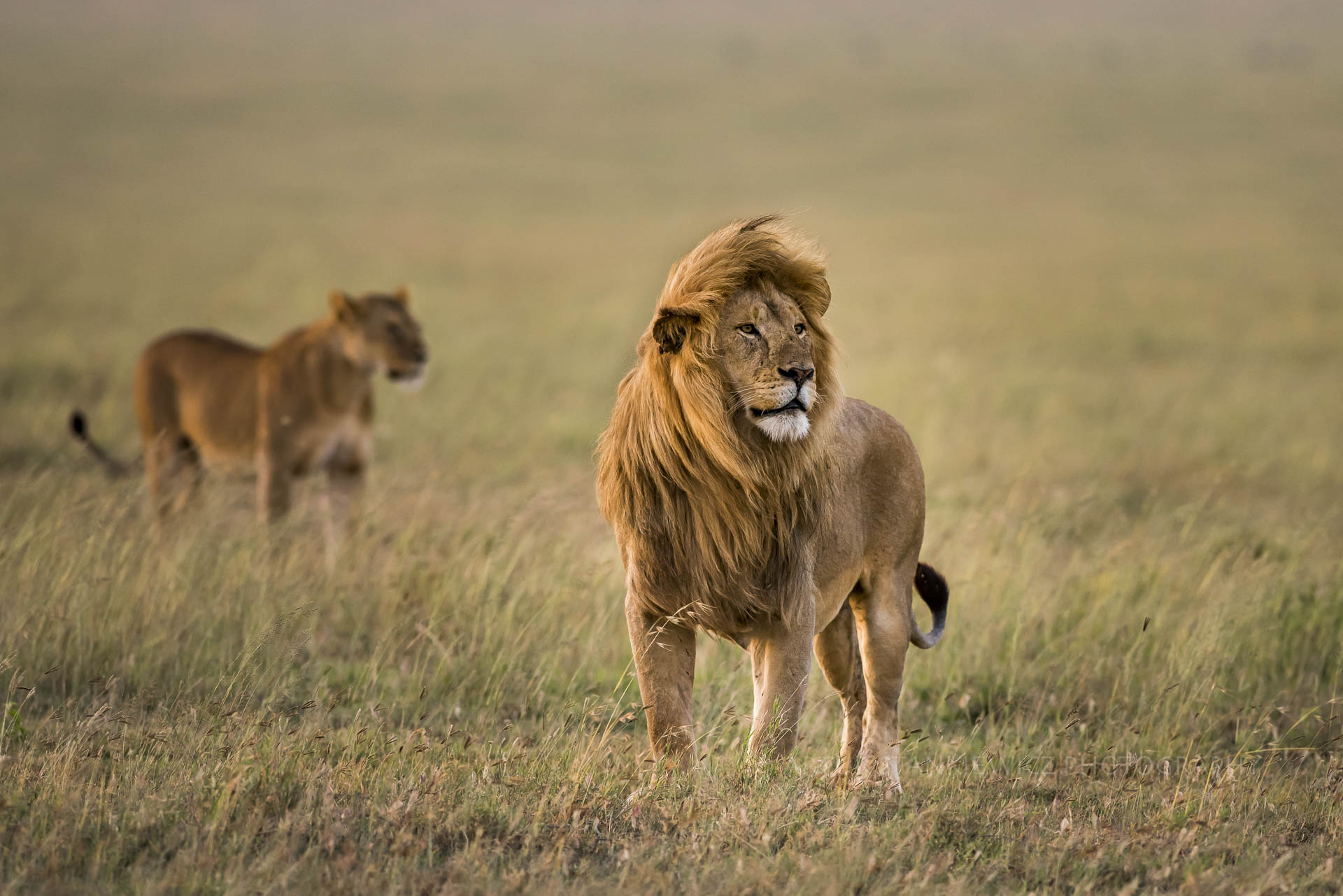
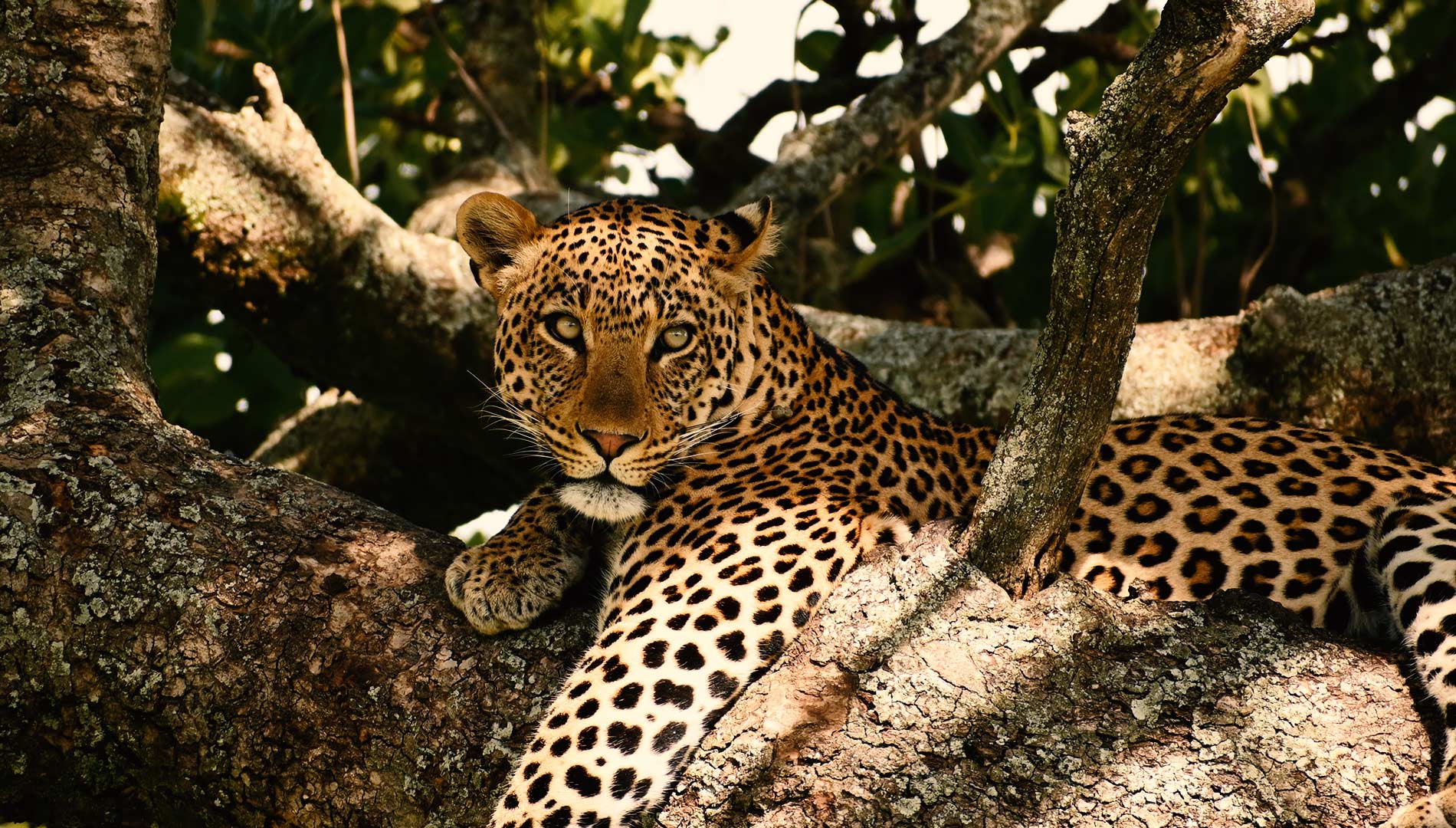
While out on your game drive with your guide on today's safari, you're quite likely to encounter a lion, leopard, elephant, zebra, cheetah, and antelope, among many other species. You'll be on your way to your lodging for some well-deserved rest, a delicious dinner, and a restful night's sleep.

Day 4
Serengeti National Park

You are in for a once-in-a-lifetime when you happen to witness the early morning sunrise in Serengeti. The real African sights, wildlife sounds, and scents are all at your disposal consistently as long as you are in the world's most famous national park. Today, you will enjoy a full day of adventure. You'll begin your morning game drive in Serengeti National Park after breakfast, wandering in the marvelous endless landscape and always-entertaining creatures that your professional driver-guide will describe to you.

This area is traversed by the Seronera River, which provides home for a diverse diversity of wildlife. The distinctive rocky outcrops known as kopjes that define Serengeti landscape will also be seen. Kopjes are exceedingly hard and almost always granite. They might be 600 million years old, produced before the earth's surface was pushed up from the water. Lions, other cats, snakes, and hyraxes, as well as lions and other cats, live in these rocky places. As you can see if you look closely, they are slowly peeling away in layers owing to the wind and rain. Lunch in the bush will cause you wiggle your fingertips. You return to the park after lunch to look for animals.

The Serengeti's splendor becomes clearer as the day progresses. Natural disasters can strike at any time, and the different animals and birds are the "stars of the show." Because the animals do not adhere to a timetable, you may see lions or leopards, elephants and zebras, cheetahs and antelopes at any time throughout your explorations. You return to your lodging for dinner with some much-required relaxation in the late afternoon.

Day 5
Seregeti National Park – Ngorongoro Crater

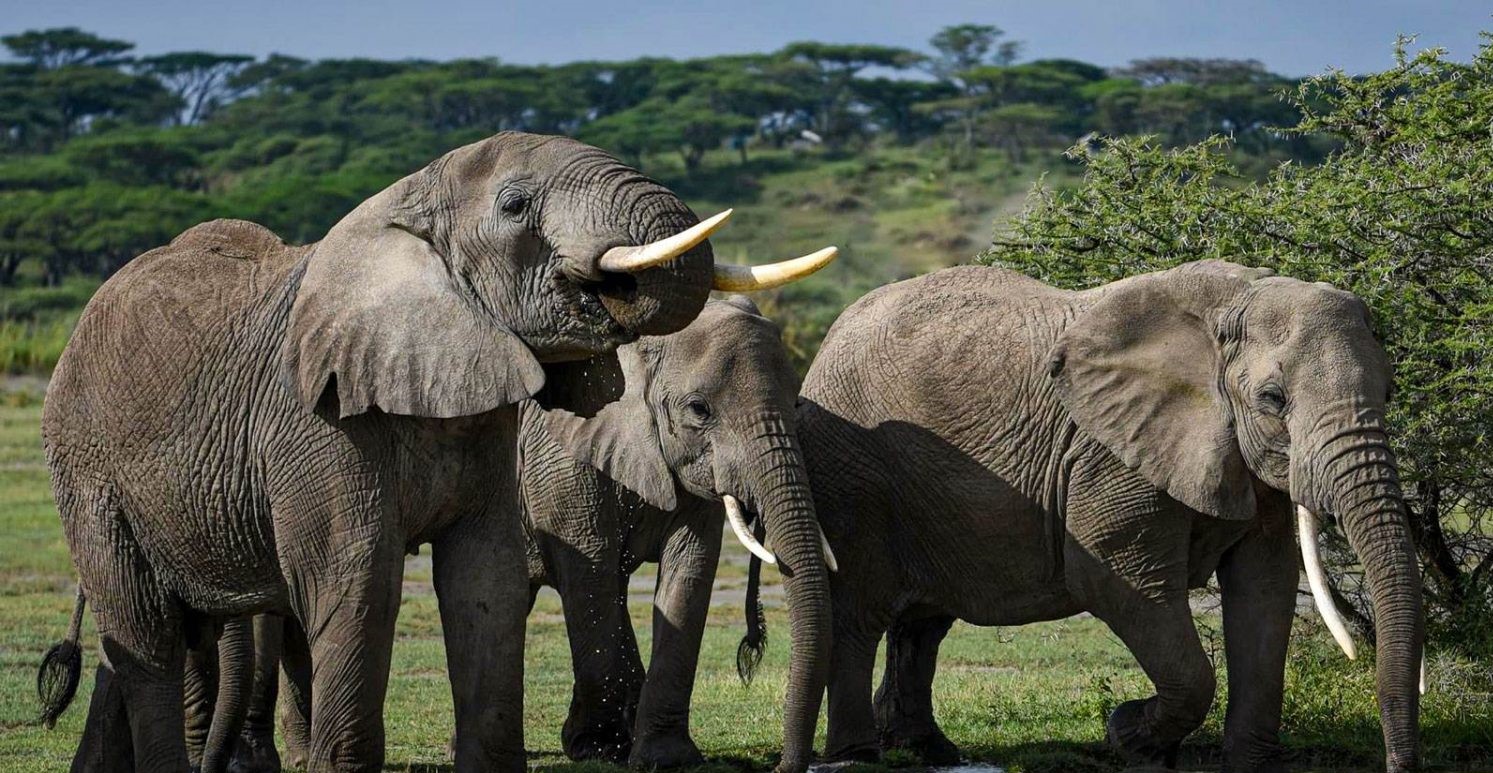
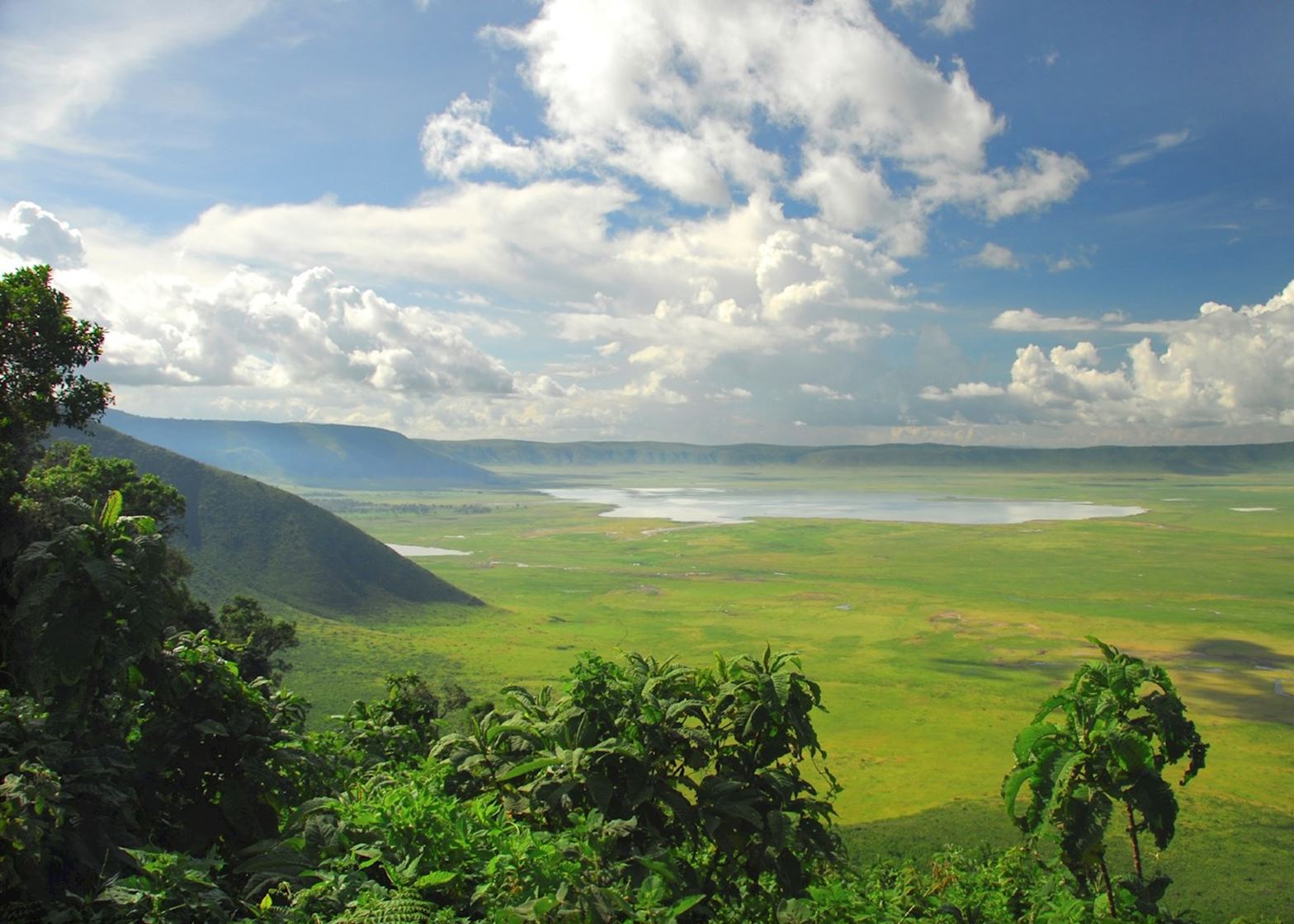
After taking your breakfast at the dawn, you will head to the Ngorongoro Crater, the world's biggest once actives volcanic crater and the heart of the Ngorongoro Conservation Area. You sure wouldn’t want to miss out on anything in this elephant country. As they approach the end of their life, the big male tuskers come to feed the soft, swampland grasses on the side of the surrounding swampland, which is frequently referred to as the "elephant graveyard."

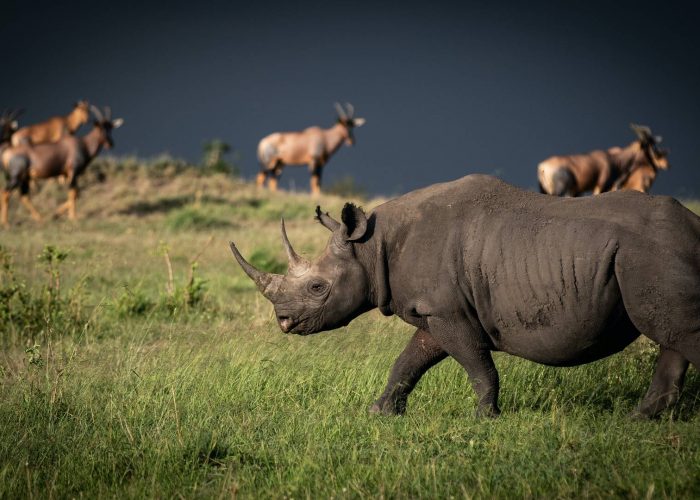
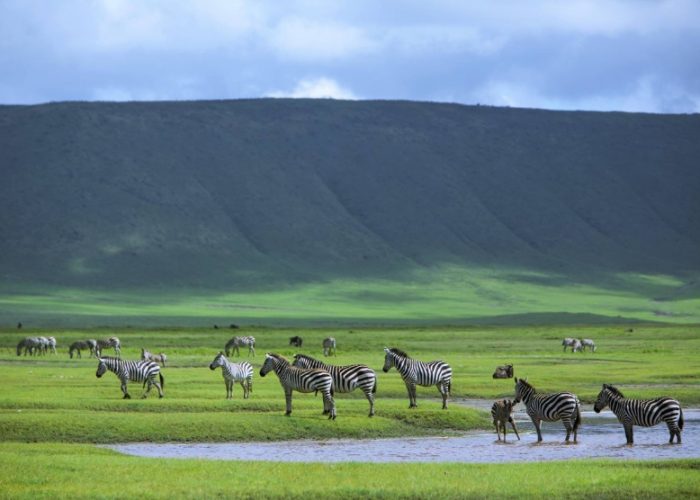
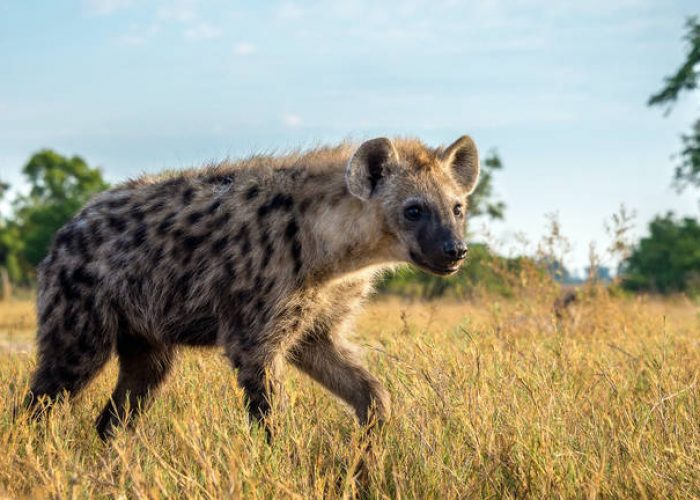
The Ngorongoro crater is known for its huge number of many animals. Statistic shows that there are roughly 9,000 zebra, as well as 15,000 gnu, 120 lions with well-defined territories, 400 hyenas, and approximately 50 black rhino. Many gnus and other herd animals reside here year-round, taking use of the multiple water sources that are available all year and are fed by migrators during the mating season. There are eland, Serval, jackal, Thomson's gazelle, and buffalo. Hippos are commonly seen in ponds and marshes. The highlands' vegetation and animals are lively and numerous around water. Flamingos flock to Lake Magadi, which covers a section of the crater floor.

Day 6
Ngorongoro Conservation Area – Lake Eyasi

After taking your breakfast in the morning, you will head to the Hadzabe village in Lake Eyasi. The Lake is located in the central Rift Valley, neighboring Serengeti Plateau. The Hadzabe people are one of the few ancient tribes with peculiar lifestyle that is interesting to learn about. Genetically, the Hadza are not closely related to any other people. Once classified among the Khoisan languages, primarily because it has clicks, the Hadza language (Hadzane) is actually thought to be an isolate, unrelated to any other.

Hadzane is an entirely oral language, but it is not predicted to be in danger of extinction. UNESCO states that the language is not endangered but vulnerable because most children learn it but the use is restricted to certain areas of life, for example to the home. Hadzane is also considered the most important factor of distinguishing who is and is not actually a part of the Hadza people. In more recent years, many of the Hadza have learned Swahili, the national language of Tanzania, as a second language. Whilst here, you can take a walk around the Lake, go hunting with Hadzabe bushmen and if you like, they can teach you how to shoot an arrow as when they go out for hunting.

After your fantastic day at Lake Eyasi, return to your lodging for dinner and rest.

Day 7
Ngorongoro – Arusha – Flying To Zanzibar Island

Following your breakfast, you will leave Ngorongoro for Arusha where you can buy some time out for shopping, city exploration or simply relaxing before your departure to Zanzibar Beach Holiday. Whilst here, you can do a cultural tour in one of the Maasai village or go to snake park situated just few kilometers away from the city. However, your flight schedule may affect intervene with these activities. You will head to Arusha Regional Airport for your evening light-aircraft flight to Zanzibar Island where you will receive a warm welcome from our staff members.

Whilst here, you will enjoy a 4 night accommodation and paradise-like experience while looking forward to have so much fun in the next two days before your departure. 

Day 8
Free Time In Zanzibar Island

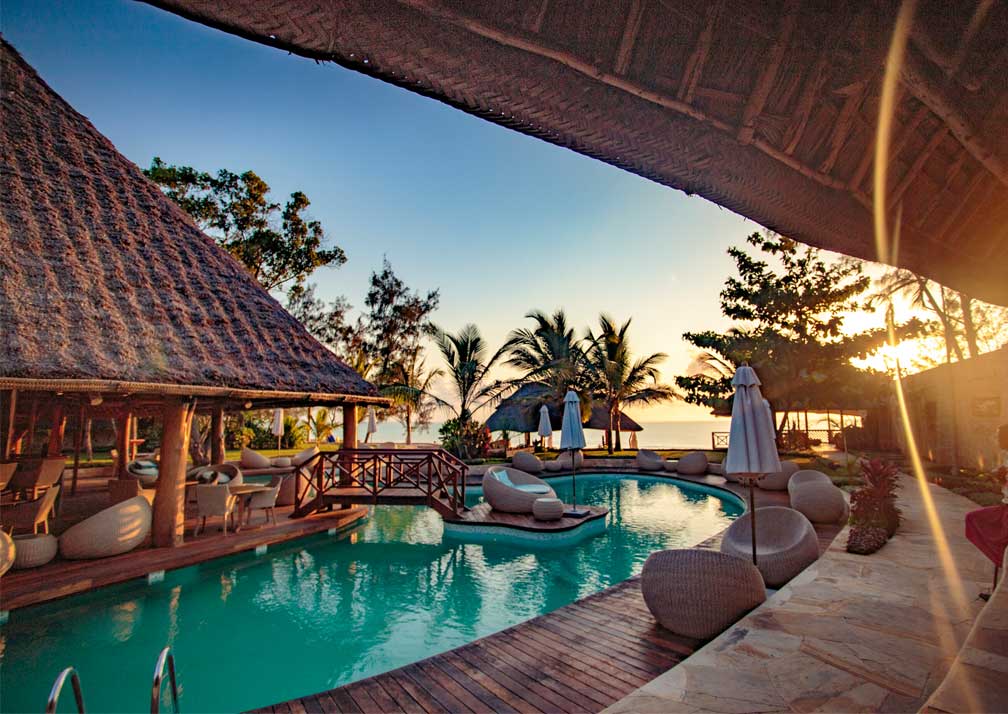
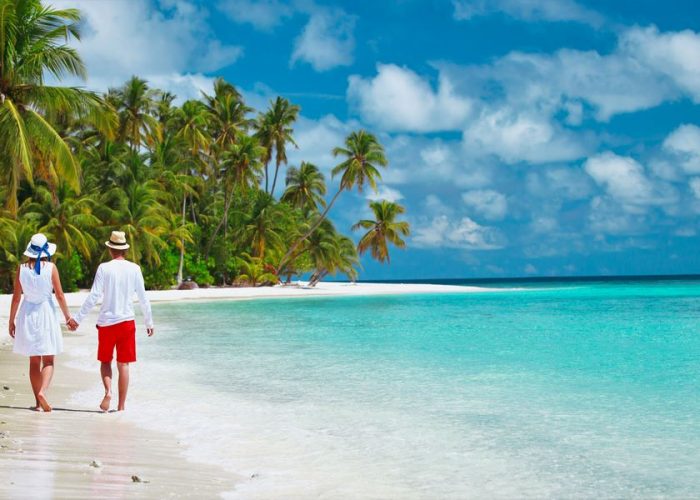
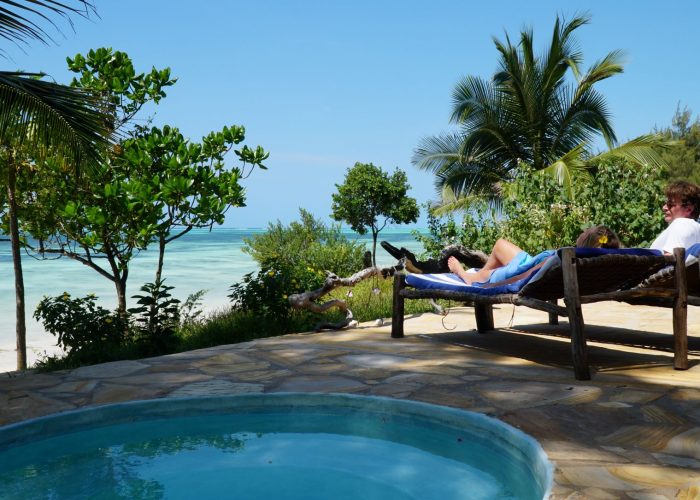
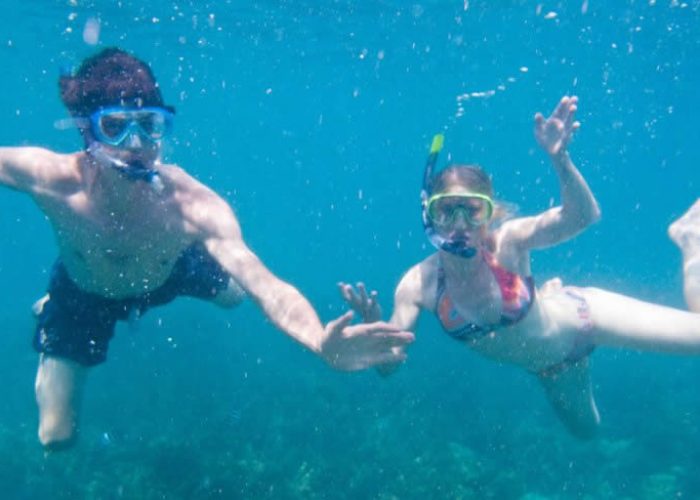
In your spare time, relax on the beaches and swim, snorkel, or dive in the clear, warm waters. A cocktail and a gorgeous sunset go together, so have one while the sun sets and the day fades into night. In the evening, stroll along Zanzibar's beaches and sands. Beach volley ball, table tennis, and other games are among the activities provided both during the day and at night at your resort.

Day 9-11
Departure

Your stay in Tanzania is coming to an end. You can, however, choose some interesting activities to do while winding up your stay here or simply relaxing while waiting for a short excursion to the mainland later in the afternoon or evening to catch your connecting flight home.

We are always ready and delighted to assist you in organizing a fantastic safari package that is appropriate for you and your traveling style. Contact us today and let us assist you in customizing your trip.

Day 12

Enquire this Tour

9 Days

KARAFUU HONEYMOON SAFARI

Tour Type

Tanzania – Zanzibar Island Safari

WHERE TO GO

Tarangire National Park, Lake Manyara National Park, Serengeti National Park, Ngorongoro Crater and Zanzibar

IMPORTANT NOTE

This is only an illustration of what we do; each of our safaris is tailor-made. Contact our team of specialists right away to begin creating the ideal safari for you.

About this Tour

A fantastic safari designed not just for honeymooners but also for individuals who want to get away from their everyday busy lives and enjoy being outside. 

This trip will take you to Tanzania’s best sites for a great wildlife viewing, including Lake Manyara National Park, Serengeti National Park, the Ngorongoro Crater and finish your safari with three days of pure beach tranquility in Zanzibar Island, the most serene destinations in Africa. This is certainly the best Tanzania Safari and Zanzibar beach holiday you’ll ever have.

Your Trip’s Roadmap

Kilimanjaro International Airport Pick Up to Arusha

On your arrival, one of our staff members will pick you from the Kilimanjaro International Airport and take you to your booked hotel, where you will get a short briefing about the tour.  We believe that you will enjoy your stay here and hope that your safari with Zoe will exceeds your expectations.

Day 1
Arusha - Manyara National Park

Right after your breakfast, your driver guide will arrive at your hotel and wait for you ready to start your trip to Manyara National Park. The approximate distance from Arusha to Manyara National Park is 130 kilometers. Manyara is well-known for its stunning lake and runs along the Rift Valley Escarpment. It is abundant in both flora and fauna. Relish the beauty and stillness as dressed in a pink flamingos flutter over the shallow, alkaline waters, searching for algae to munch. Over 400 different species of birds have been observed onsite, varying from bee-eaters to hornbills and all in between.

Also look out for yellow-billed storks and pink-backed pelicans if you visit between February and June. Manyara's geography is confined, yet it has a variety of ecosystems, including different woods nourished by rivers seeping from the surrounding escarpment. Monkeys abound, but keep an eye out for lions, giraffes, warthogs, and cranky Cape buffalo, all of which are proud residents of this park. When you arrive at the hippo pool, keep your nose to the ground since these large semi-aquatic creatures stink!

Day 2
Manyara National Park – Serengeti National Park

After breakfast in the early morning, your driver guide and you will head for your next destination, Tanzania's oldest and most famous Serengeti National Park. It takes up to 3 hours and 30 minutes to get here before your game drive starts. Unlike many other areas on the planet, the Serengeti is a one-of-a-kind ecosystem. The breathtaking scenery, bright shifting light, and, of course, the plethora of species that have made this their home will fascinate you. With thousands of predators – and hundreds of thousands of prey – it is no surprise there is always something fascinating going on in the animal communities.

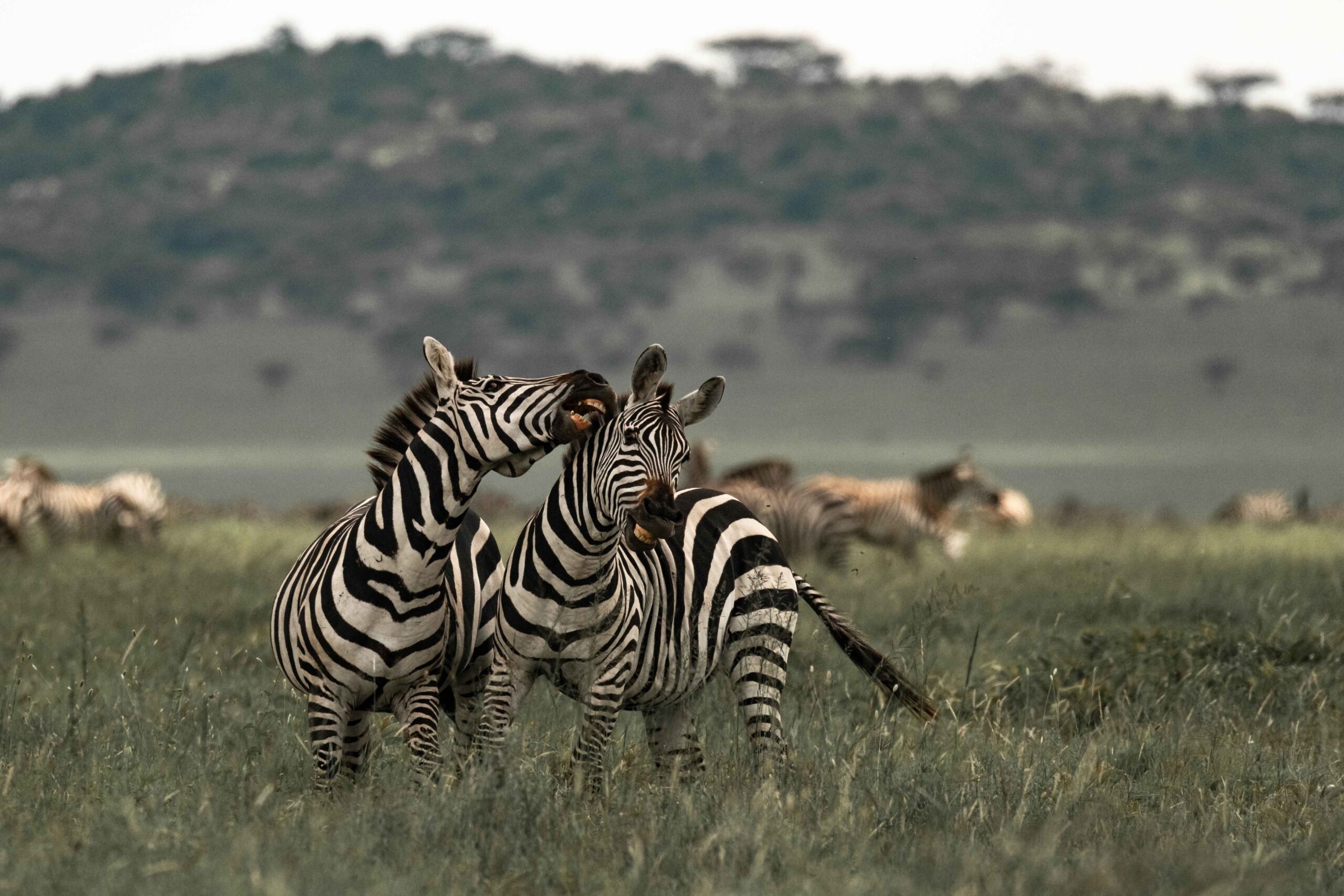
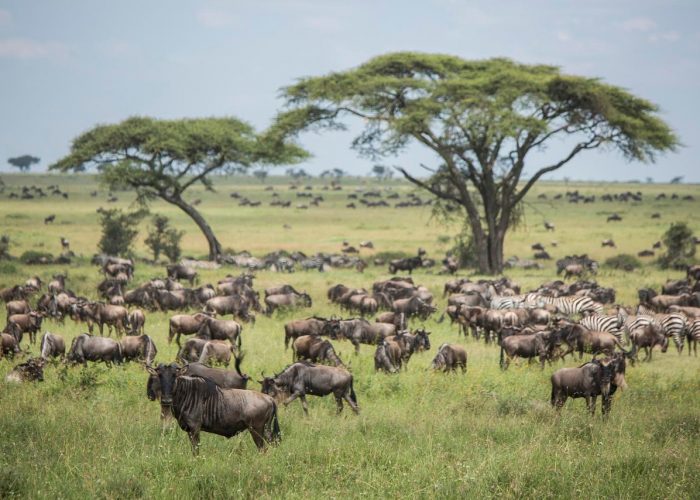
One of the park's main draws is the annual migration of wildebeest and zebra. However, the Serengeti is ideal all year for spotting predators such as lion, leopard, and cheetah, as well as elephant, giraffe, hyena, hippo, rhino, and other antelopes and birds. After lunch in the park or at your lodge, you will go on another exciting game drive before returning to your chosen accommodation for a delicious meal and a restful evening.

Day 3
Serengeti National Park Full Day

You are in for a once-in-a-lifetime when you happen to witness the early morning sunrise in Serengeti. The real African sights, wildlife sounds, and scents are all at your disposal consistently as long as you are in the world's most famous national park. Today, you will enjoy a full day of adventure. You'll begin your morning game drive in Serengeti National Park after breakfast, wandering in the marvelous endless landscape and always-entertaining creatures that your professional driver-guide will describe to you.

This area is traversed by the Seronera River, which provides home for a diverse diversity of wildlife. The distinctive rocky outcrops known as kopjes that define Serengeti landscape will also be seen. Kopjes are exceedingly hard and almost always granite. They might be 600 million years old, produced before the earth's surface was pushed up from the water. Lions, other cats, snakes, and hyraxes, as well as lions and other cats, live in these rocky places. As you can see if you look closely, they are slowly peeling away in layers owing to the wind and rain.

Lunch in the bush will cause you wiggle your fingertips. You return to the park after lunch to look for animals. The Serengeti's splendor becomes clearer as the day progresses. Natural disasters can strike at any time, and the different animals and birds are the "stars of the show." Because the animals do not adhere to a timetable, you may see lions or leopards, elephants and zebras, cheetahs and antelopes at any time throughout your explorations. You return to your lodging for dinner with some much-required relaxation in the late afternoon.

Day 4
Serengeti Natioal Park – Ngorongoro Crater

After taking your breakfast at the dawn, you will head to the Ngorongoro Crater, the world's biggest once actives volcanic crater and the heart of the Ngorongoro Conservation Area. You sure wouldn’t want to miss out on anything in this elephant country. As they approach the end of their life, the big male tuskers come to feed the soft, swampland grasses on the side of the surrounding swampland, which is frequently referred to as the "elephant graveyard."

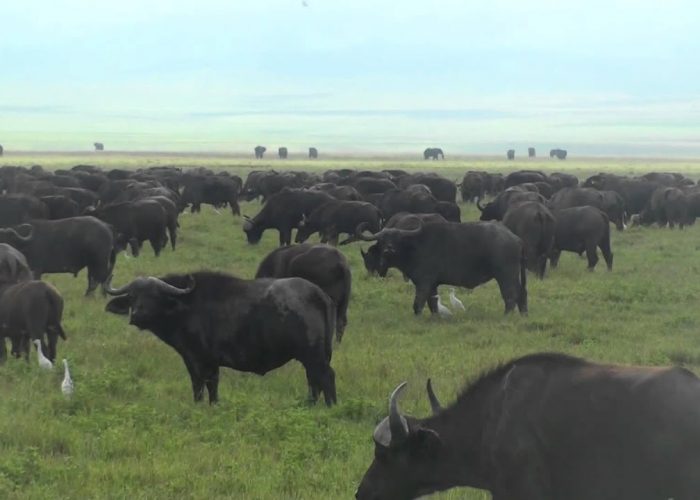
The Ngorongoro crater is home to a plethora of species and a picturesque paradise, for a full day of game viewing with a picnic lunch at a private scenic location (hippos pool). The Ngorongoro Crater, the world's biggest complete caldera, is home to a variety of species that lives permanently on the crater floor. On the crater bottom grasslands, lion prides, herds of Cape buffalo, impala, Thompson gazelles, rhino, golden and black-backed jackal, zebra, cheetah, leopard, and the spotted hyena roam freely. Few places on the planet have such a vast diversity of landscapes within a territory of this size, and few places on earth have such a natural variety and spectacular beauty. After your game drive, your driver guide and you will return to your selected accommodation for your evening meal and a great evening.

Day 5
Ngorongoro – Arusha – Zanzibar Island

Following your breakfast, you will leave Ngorongoro for Arusha where you can buy some time out for shopping, city exploration or simply relaxing before your departure to Zanzibar Beach Holiday. Whilst here, you can do a cultural tour in one of the Maasai village or go to snake park situated just few kilometers away from the city. However, your flight schedule may affect intervene with these activities. You will head to Arusha Regional Airport for your evening light-aircraft flight to Zanzibar Island where you will receive a warm welcome from our staff members.

Whilst here, you will enjoy a 4 night accommodation and paradise-like experience while looking forward to have so much fun in the next two days before your departure.  

Day 6
Free Time In Zanzibar Island

In your spare time, relax on the beaches and swim, snorkel, or dive in the clear, warm waters. A cocktail and a gorgeous sunset go together, so have one while the sun sets and the day fades into night. In the evening, stroll along Zanzibar's beaches and sands. Beach volley ball, table tennis, and other games are among the activities provided both during the day and at night at your resort.


Day 7-8
Departure

Your stay in Tanzania is coming to an end. You can, however, choose some interesting activities to do while winding up your stay here or simply relaxing while waiting for a short excursion to the mainland later in the afternoon or evening to catch your connecting flight home.

We are always ready and delighted to assist you in organizing a fantastic safari package that is appropriate for you and your traveling style. Contact us today and let us assist you in customizing your trip.

Day 9

7 Days

ASHY-STARLING TANZANIA GREAT WILDEBEEST MIGRATION SAFARI

Tour Type

Great Migration Safari

WHERE TO GO

Tarangire National Park, Serengeti National Park(Central, Northern), and Ngorongoro Crater

IMPORTANT NOTE

This is only an illustration of what we do; each of our safaris is tailor-made. Contact our team of specialists right away to begin creating the ideal safari for you.

About this Tour

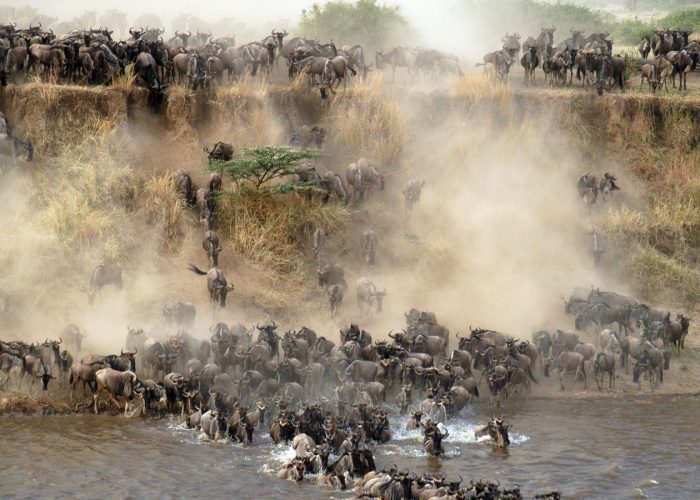
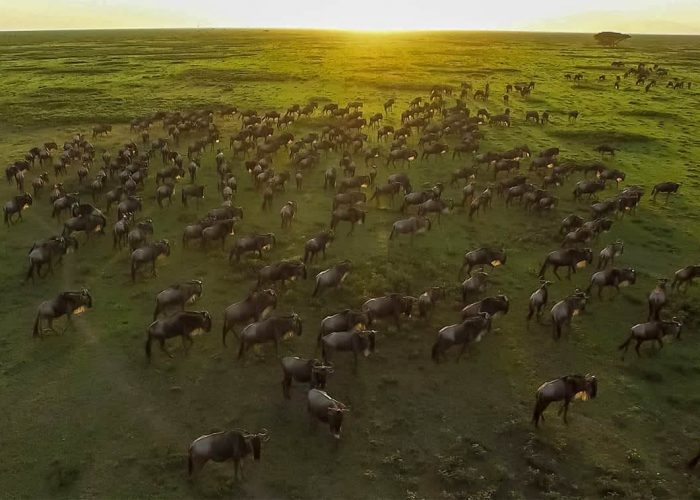
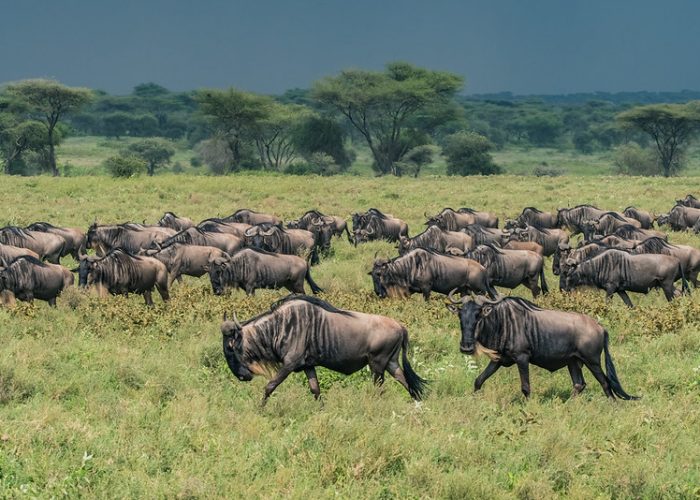
This 7-day safari provides you with an opportunity to witness the Great Wildebeest Migration in the magnificent Serengeti National Park.  Known as one of the Seven Wonders of the World, the great migration is an iconic safari one must-see. 

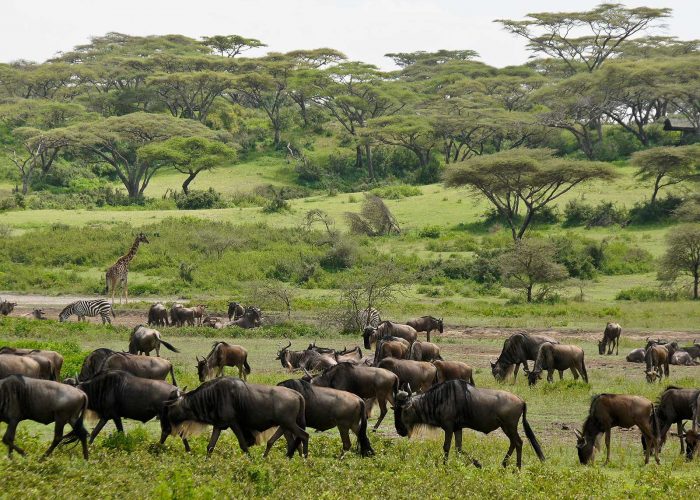
Over two million wildebeest, zebra, and other herbivores migrate from the southern Serengeti to the lush green grasslands of the Masai Mara each year. However, this great adventure kicks off at the beautiful Tarangire National Park and end at gorgeous Ngorongoro Conservation Area with its jaw-dropping once-active volcanic crater, filled with wildlife.

Your Trip’s Roadmap

Kilimanjaro International Airport Pick Up to Arusha

On your arrival, one of our staff members will pick you from the Kilimanjaro International Airport and take you to your booked hotel, where you will get a short briefing about the tour.  We believe that you will enjoy your stay here and hope that your safari with Zoé Expeditions will exceed your expectations

Day 1
Arusha to Tarangire National Park - Karatu

In the morning after you have taken your breakfast at around 6:00 am, your driver guide will arrive at the hotel and pick you up to begin your adventure. It takes approximately 3 hrs (150.6 km) from Arusha to get to the Tarangire gate. Popularly known as the Elephant Playground, Tarangire has a lot to offer from its magnificent variety of wild animals and its huge area. A large population of Elephants find their home here. Other animals like lion, buffalo, gazelle, zebra, and gnu are also found here. Expect to see many other mammals with amazing views like giraffes feeding from the beautiful acacia branches, zebras and gazelles hanging around together. Sometimes when lucky we get to see the pride of lions lying under trees, and if lucky enough, you might get to see cheetahs, onyx and kudu from the road stand-point.

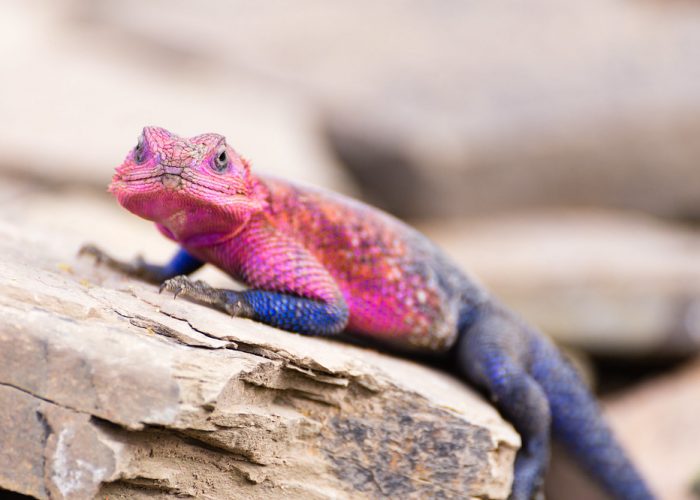
So, what is it about Tarangire that makes it so unique? You may inquire. It is hard to tell everything about this beautiful park in one sentence. One of the magical moments is when you encounter the Agama lizard. As the temperature changes, the agama male lizard, which changes colors right before your eyes, will leave you speechless. The hyrax - an elephant-like mammal also known as Pimbi - will brighten your day, among many other fantastic scenarios.

You won't pass many trees without spotting something that will intrigue your interest. A brilliant starling or a lilac-breasted roller may be a stunning splash of color. It's difficult not to laugh at the well-named, studious-looking secretary bird as it awkwardly pads over the grasslands.

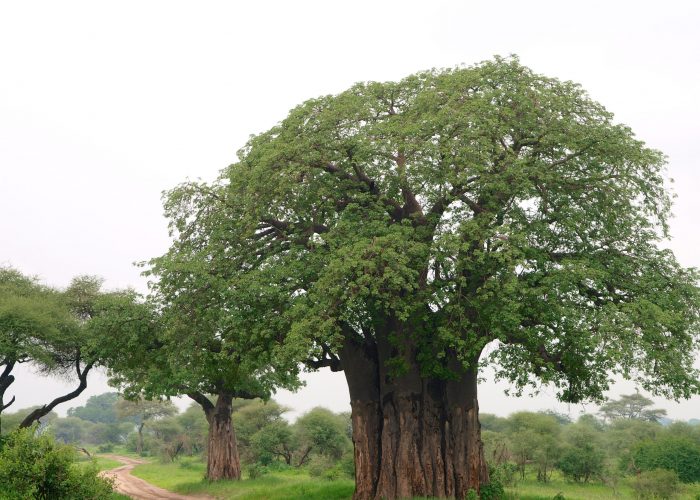
Grand baobab trees, rolling grasslands, and acacia woodland are all well-known features of the Tarangire National Park. After a long game drive and a picnic lunch, you'll head to the highland region of the Ngorongoro in a small town of Karatu where you will be provided with services tailored to your needs, giving you the opportunity to reminisce about the highlights of your game drive, savor your delicious dinner, and enjoy a restful night; anticipating the best that the remaining days have in store for you.


Day 2
Karatu - Serengeti

After breakfast in the early morning, your driver guide and you will head for your next destination, Tanzania's oldest and most famous Serengeti National Park. It takes up to 3 hours and 30 minutes to get here before your game drive starts. Unlike many other areas on the planet, the Serengeti is a one-of-a-kind ecosystem. The breathtaking scenery, bright shifting light, and, of course, the plethora of species that have made this their home will fascinate you. With thousands of predators – and hundreds of thousands of prey – it is no surprise there is always something fascinating going on in the animal communities.

While out on your game drive with your guide on today's safari, you're quite likely to encounter a lion, leopard, elephant, zebra, cheetah, and antelope, among many other species. You'll be on your way back to your lodging for some well-deserved rest, a delicious dinner, and a restful night's sleep.
Day 3
Central - Northern Serengeti

After breakfast in the early morning, your driver guide and you will head to the northern Serengeti, a journey that will take up to 5 hours, with plenty of changing landscapes and wildlife highlights to witness along the route before your game drive starts from here.
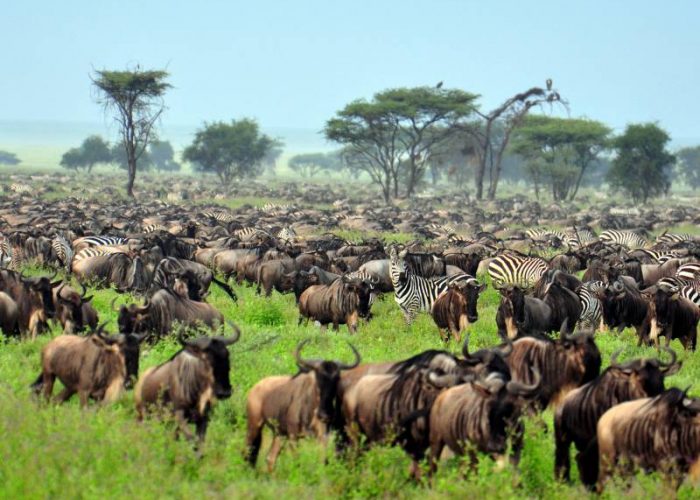
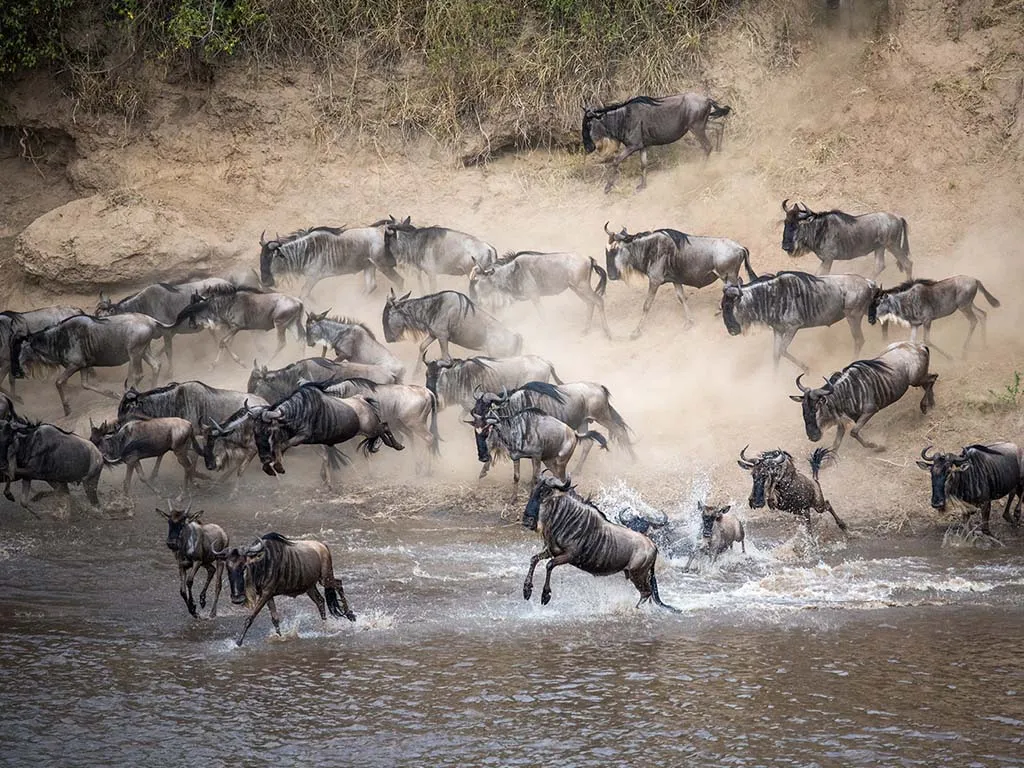
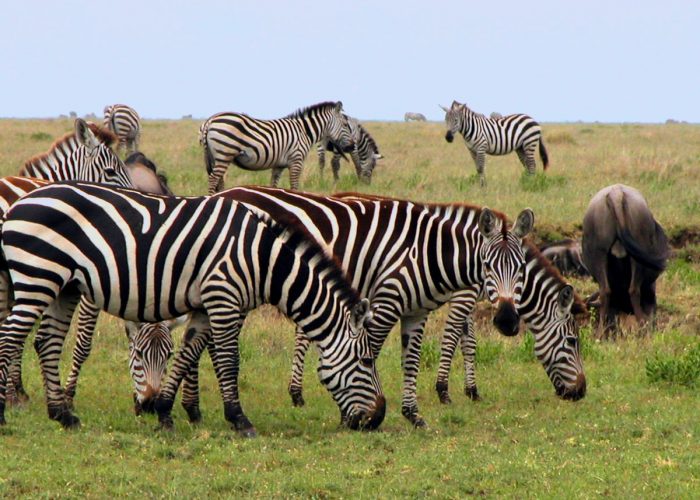
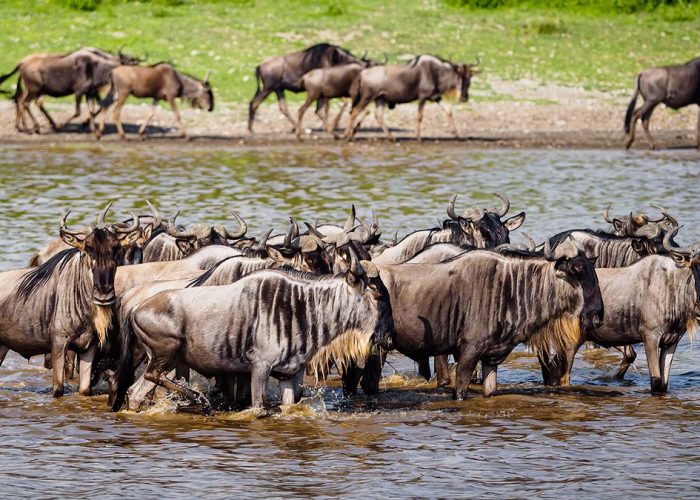
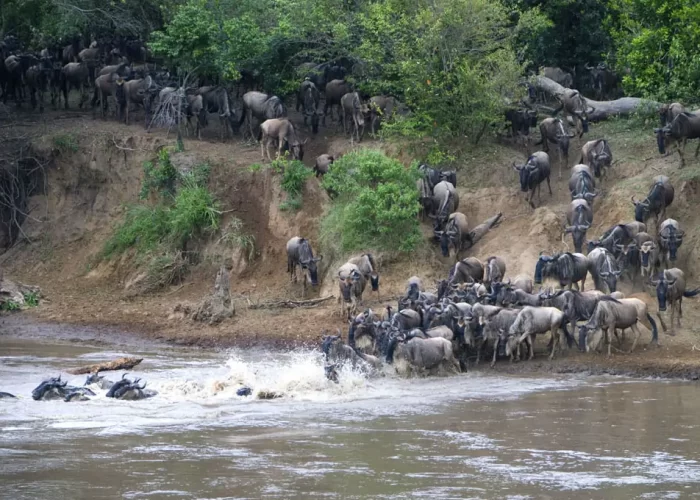
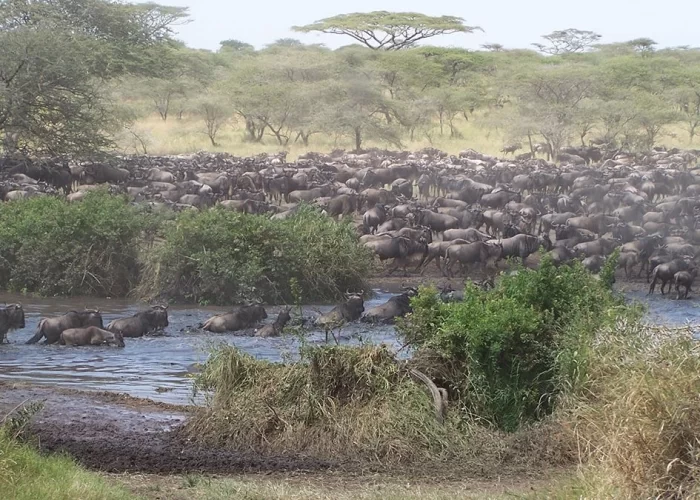
The Northern Serengeti is a vast expanse of open forest that stretches from the Seronera River in the south to the Mara River in the north, marking the Kenyan border. You are now in the path of the Great Migration, which will witness tens of thousands of wildebeest and zebra preparing to cross the Mara River into Kenya and return.

It's an important aspect of the annual tradition. Crossings cannot be guaranteed on a regular basis, but your driver-guide knows the best places to see them, which is one of Nature's most awe-inspiring spectacles. Patience is essential! And if you don't get to see a crossing today, there's always tomorrow; and in the Northern Serengeti, there's enough to see today. After your game drive, you'll be led away to your preselected lodging for some well-deserved rest and an evening feast.

Day 4
Serengeti National Park

You are in for a once-in-a-lifetime experience when you happen to witness the early morning sunrise in Serengeti. The real African sights, wildlife sounds, and scents are all at your disposal consistently as long as you are in the world's most famous national park. After breakfast, you'll go on a full-day wildlife drive in the Northern Serengeti with your driver-guide. If you didn't witness any river crossings yesterday, there's still hope today.

Your driver-guide is well-versed on where and when they may occur. Elephant and giraffe populations, as well as dik-dik, buffalo, and lions, are all there, but the Migration phase creates a completely different scenario. Huge crocodiles lie on the riverbanks, waiting to pounce on a passing herd of wildebeests as they make their way across to the other side. Is there safety in numbers? Not always, so there's a chance you'll observe not just a crossing but also a kill. Patience will pay off for both the crocodiles and you, the visitor with your camera poised! After a long and exciting day of wildlife-spotting in the Northern Serengeti, you will return to your accommodation for supper and your second night's stay.

Day 5
Northern Serengeti - Central Serengeti

In the early morning before or during your breakfast, you can be sure that your drive-guide was most likely observing what was going on in the outside world of wild animals.

He will find you a highlight, no matter what! You take advantage of this morning's wildlife drive in the Northern Serengeti before departing for the day. This gives you more time to marvel at the migrating herds and the perils and obstacles they confront each year in their struggle for survival. You will depart in the early afternoon for your next destination, the Central Serengeti, a 155-kilometer drive that will take around 5 hours.

There will be lots to view along the route, and when you arrive, you will proceed to your preplanned destination, where you spent the night on day three of your safari. There is so much to expect on your arrival here.

Day 6
Serengeti – Ngorongoro Consrvation Area

After breakfast, you'll travel on a morning game drive in the beautiful Serengeti, marveling at the animal inhabitants. The Seronera section of the Central Serengeti is the most visited sector in the national park, thanks to its informative visitor center. Animals love it, too. There is always something to see because the Seronera River runs all year. There are several game drives available, which may reveal massive prides of lions, hippo, or elephant herds (the park's elephant population has recently increased).

Considering your intentions, you might wish to stop at the Serengeti Visitor Centre, which offers an excellent overview of the park's eco-system as well as information on the region's conservation history. Bernhard Grzimek and the Frankfurt Zoological Society, who envisioned the Serengeti's eco-preservation system, will be highlighted. Following lunch in Serengeti, you will head to the Ngorongoro Conservation Area in the south-east.

Day 7
Ngorongoro Crater - Arusha

After taking your breakfast at the dawn, you will head to the Ngorongoro Crater, the world's biggest once actives volcanic crater and the heart of the Ngorongoro Conservation Area. You sure wouldn’t want to miss out on anything in this elephant country. As they approach the end of their life, the big male tuskers come to feed the soft, swampland grasses on the side of the surrounding swampland, which is frequently referred to as the "elephant graveyard."

The Ngorongoro crater is known for its huge number of many animals. Statistic shows that there are roughly 9,000 zebra, as well as 15,000 gnu, 120 lions with well-defined territories, 400 hyenas, and approximately 50 black rhino. Many gnus and other herd animals reside here year-round, taking use of the multiple water sources that are available all year and are fed by migrators during the mating season.

There are eland, Serval, jackal, Thomson's gazelle, and buffalo. Hippos are commonly seen in ponds and marshes. The highlands' vegetation and animals are lively and numerous around water. Flamingos flock to Lake Magadi, which covers a section of the crater floor. After your morning game drive and lunch in this stunning crater, you'll have a 190.6-kilometer trip back to Arusha that will take roughly 4 hours.

Day 8

6 Days

TURACOS TANZANIA LODGE SAFARI

Tour Type

Lodge Safari

WHERE TO GO

Tarangire National Park, Serengeti National Park, and Ngorongoro Crater

IMPORTANT NOTE

This is only an illustration of what we do; each of our safaris is tailor-made. Contact our team of specialists right away to begin creating the ideal safari for you.

About this Tour

This 6-day safari is an awesome opportunity to witness the Great Wildebeest Migration in the magnificent Serengeti National Park with visits to some other true Northern Circuit highlights.  as you will begin at beautiful Tarangire National Park and end at gorgeous Ngorongoro Conservation Area with its jaw-dropping volcanic crater, filled with wildlife.

Known as one of the Seven Wonders of the World, the great migration is an iconic safari must-see. Over two million wildebeest, zebra, and other herbivores migrate from the southern Serengeti to the lush green grasslands of the Masai Mara each year.

Your Trip’s Roadmap

Kilimanjaro International Airport Pick Up to Arusha

On your arrival, one of our staff members will pick you from the Kilimanjaro International Airport and take you to your booked hotel, where you will get a short briefing about the tour.  We believe that you will enjoy your stay here and hope that your safari with Zoe will exceeds your expectations.

Day 1
Arusha to Tarangire National Park

In the morning after you have taken your breakfast at around 6:00 am, your driver guide will arrive at the hotel and pick you up to begin your adventure. It takes approximately 3 hrs (150.6 km) from Arusha to get to the Tarangire gate. Popularly known as the Elephant Playground, Tarangire has a lot to offer from its magnificent variety of wild animals and its huge area.

A large population of Elephants find their home here. Other animals like lion, buffalo, gazelle, zebra, and gnu are also found here. Expect to see many other mammals with amazing views like giraffes feeding from the beautiful acacia branches, zebras and gazelles hanging around together. Sometimes when lucky we get to see the pride of lions lying under trees, and if lucky enough, you might get to see cheetahs, onyx and kudu from the road stand-point.

So, what is it about Tarangire that makes it so unique? You are free to inquire. As the temperature changes, the agama male lizard, which changes colors right before your eyes, will leave you speechless. The hyrax - an elephant-like mammal also known as Pimbi - will brighten your day, among many other fantastic scenarios.

You won't pass many trees without spotting something that will intrigue your interest. A brilliant starling or a lilac-breasted roller may be a stunning splash of color. It's difficult not to laugh at the well-named, studious-looking secretary bird as it awkwardly pads over the grasslands.

Grand baobab trees, rolling grasslands, and acacia woodland are all well-known features of the Tarangire National Park. After a long game drive and a picnic lunch, you'll head to your accommodation and take advantage of the services tailored to your needs, giving you the opportunity to reminisce about the highlights of your game drive, savor your delicious dinner, and enjoy a restful night, anticipating the best that the remaining days have in store for you.

Day 2
Tarangire National Park – Karatu

Following a full breakfast, you will embark on another wildlife drive in Tarangire National Park. The diversified landscape, with its riverine woods and grasslands, as well as acacia and baobab, may be regarded a wonder in and of itself. During the dry season, Tarangire becomes a genuine wildlife refuge for the region.  You may recognize big mammals and birds like an Ostrich but it is very possible that could fail to identify or name the little one. Here when your professional guide comes in. He’ll explain to you amidst diversities.

You will depart from Tarangire and be on your way to your next accommodation in the high regions of the Ngorongoro conservation are, Karatu by way of Mto wa Mbu. You could stop here and there along the way to take photos or shopping in one of the curio shops for some shopping. One of the booked lodges In Karatu will be your home for the night. Enjoy a full delicious dinner and a restful night and dream of the Serengeti.

Day 3
Karatu – Serengeti National Park Via Ngorongoro Conservation Area

After breakfast in the early morning, your driver guide and you will head for your next destination, Tanzania's oldest and most famous Serengeti National Park. It takes up to 3 hours and 30 minutes to get here before your game drive starts. Unlike many other areas on the planet, the Serengeti is a one-of-a-kind ecosystem. The breathtaking scenery, bright shifting light, and, of course, the plethora of species that have made this their home will fascinate you. With thousands of predators – and hundreds of thousands of prey – it is no surprise there is always something fascinating going on in the animal communities.

While out on your game drive with your guide on today's safari, you're quite likely to encounter a lion, leopard, elephant, zebra, cheetah, and antelope, among many other species. You'll be on your way back to your lodging for some well-deserved rest, a delicious dinner, and a restful night's sleep.

Day 4
Serengeti National Park

You are in for a once-in-a-lifetime when you happen to witness the early morning sunrise in Serengeti. The real African sights, wildlife sounds, and scents are all at your disposal consistently as long as you are in the world's most famous national park. Today, you will enjoy a full day of adventure. You'll begin your morning game drive in Serengeti National Park after breakfast, wandering in the marvelous endless landscape, ever-changing lights, and always-entertaining creatures that your professional driver-guide will describe to you.

This area is traversed by the Seronera River, which provides home for a diverse diversity of wildlife. The distinctive rocky outcrops known as kopjes that define Serengeti landscape will also be seen. Kopjes are exceedingly hard and almost always granite.

They might be 600 million years old, produced before the earth's surface was pushed up from the water. Lions, other cats, snakes, and hyraxes, as well as lions and other cats, live in these rocky places. As you can see if you look closely, they are slowly peeling away in layers owing to the wind and rain. Lunch in the bush will be a once-in-a-lifetime experience. You return to the park after lunch to look for animals.

The Serengeti's splendor becomes clearer as the day progresses. Natural disasters can strike at any time, and the different animals and birds are the "stars of the show." Because the animals do not adhere to a timetable, you may see lions or leopards, elephants and zebras, cheetahs and antelopes at any time throughout your explorations. You return to your lodging for dinner with some much-required relaxation in the late afternoon.

Day 5
Serengeti National Park - Ngorongoro Conservation Area

After breakfast, you'll travel on a morning game drive in the beautiful Serengeti, marveling at the animal inhabitants. The Seronera section of the Central Serengeti is the most visited sector in the national park, thanks to its informative visitor center. Animals love it, too. There is always something to see because the Seronera River runs all year.

There are several game drives available, which may reveal massive prides of lions, hippo, or elephant herds (the park's elephant population has recently increased). Considering your intentions, you might wish to stop at the Serengeti Visitor Centre, which offers an excellent overview of the park's eco-system as well as information on the region's conservation history. Bernhard Grzimek and the Frankfurt Zoological Society, who envisioned the Serengeti's eco-preservation system, will be highlighted.

Following lunch, you will head to the Ngorongoro Conservation Area in the south-east.

Day 6
Ngorongoro Crater - Arusha

After taking your breakfast at the dawn, you will head to the Ngorongoro Crater, the world's biggest once actives volcanic crater and the heart of the Ngorongoro Conservation Area. You sure wouldn’t want to miss out on anything in this elephant country. As they approach the end of their life, the big male tuskers come to feed the soft, swampland grasses on the side of the surrounding swampland, which is frequently referred to as the "elephant graveyard."

The Ngorongoro crater is known for its huge number of many animals. Statistic shows that there are roughly 9,000 zebra, as well as 15,000 gnu, 120 lions with well-defined territories, 400 hyenas, and approximately 50 black rhino. Many gnus and other herd animals reside here year-round, taking use of the multiple water sources that are available all year and are fed by migrators during the mating season. There are eland, Serval, jackal, Thomson's gazelle, and buffalo.

Hippos are commonly seen in ponds and marshes. The highlands' vegetation and animals are lively and numerous around water. Flamingos flock to Lake Magadi, which covers a section of the crater floor. After your morning game drive and lunch in this stunning crater, you'll have a 190.6-kilometer trip back to Arusha that will take roughly 4 hours.

End of Safari.

Day 7

5 Days

CARACAL TANZANIA LUXURYE SAFARI

Tour Type

Luxury Safari

WHERE TO GO

Tarangire National Park, Serengeti National Park, and Ngorongoro Conservation area/Crater

IMPORTANT NOTE

This is only an illustration of what we do; each of our safaris is tailor-made. Contact our team of specialists right away to begin creating the ideal safari for you.

About this Tour

A five-day excursion will take you to the finest of Tanzania’s stunning Northern circuit. This holiday will provide you with some wonderful and memorable experiences that you will remember for the rest of your life. After leaving your Arusha hotel, your first destination will be the stunning Tarangire National Park, often known as the Elephant Playground, for a full-day wildlife drive.

 The Serengeti National Park is our next stop. Serengeti is the world’s most famous and popular tourist destination, and it is home to a wide variety of animal and plant species. The breathtaking Ngorongoro Crater will make you appreciate your great experience; you’ll descend into this beautiful crater to see a range of fascinating wildlife species.

Your Trip’s Roadmap

Kilimanjaro International Airport Pick Up to Arusha

On your arrival, one of our staff members will pick you from the Kilimanjaro International Airport and take you to your booked hotel, where you will get a short briefing about the tour.  We believe that you will enjoy your stay here and hope that your safari with Zoe will exceeds your expectations.

Day 1
Arusha to Tarangire National Park - Karatu

In the morning after you have taken your breakfast at around 6:00 am, your driver guide will arrive at the hotel and pick you up to begin your adventure. It takes approximately 3 hrs 4 min (150.6 km) from Arusha to get to the Tarangire gate. Popularly known as the Elephant Playground, Tarangire has a lot to offer from its magnificent variety of wild animals and its huge area. A large population of Elephants find their home here. Other animals like lion, buffalo, gazelle, zebra, and gnu are also found here. Expect to see many other mammals with amazing views like giraffes feeding from the beautiful acacia branches, zebras and gazelles hanging around together. Sometimes when lucky we get to see the pride of lions lying under trees, and if lucky enough, you might get to see cheetahs, onyx and kudu from the road stand-point.

So, what is it about Tarangire that makes it so unique? You are free to inquire. As the temperature changes, the agama male lizard, which changes colors right before your eyes, will leave you speechless. The hyrax - an elephant-like mammal also known as Pimbi - will brighten your day, among many other fantastic scenarios.

You won't pass many trees without spotting something that will intrigue your interest. A brilliant starling or a lilac-breasted roller may be a stunning splash of color. It's difficult not to laugh at the well-named, studious-looking secretary bird as it awkwardly pads over the grasslands.

Grand baobab trees, rolling grasslands, and acacia woodland are all well-known features of the Tarangire National Park. After a lengthy game drive and a picnic lunch, you'll depart the park for Karatu, a small town in the spectacular Ngorongoro highlands. One of the Lodges here will be your home for the night.


Day 2
Karatu – Serengeti National Park Via Ngorongoro Conservation Area

After breakfast in the early morning, your driver guide and you will head for your next destination, Tanzania's oldest and most famous Serengeti National Park. It takes up to 3 hours and 30 minutes to get here before your game drive starts. Unlike many other areas on the planet, the Serengeti is a one-of-a-kind ecosystem. The breathtaking scenery, bright shifting light, and, of course, the plethora of species that have made this their home will fascinate you. With thousands of predators – and hundreds of thousands of prey – it is no surprise there is always something fascinating going on in the animal communities.

While out on your game drive with your guide on today's safari, you're quite likely to encounter a lion, leopard, elephant, zebra, cheetah, and antelope, among many other species. You'll be on your way back to your lodging for some well-deserved rest, a delicious dinner, and a restful night's sleep.

Day 3
Serengeti National Park

You are in for a once-in-a-lifetime when you happen to witness the early morning sunrise in Serengeti. The real African sights, wildlife sounds, and scents are all at your disposal consistently as long as you are in the world's most famous national park. Today, you will enjoy a full day of adventure. You'll begin your morning game drive in Serengeti National Park after breakfast, wandering in the marvelous endless landscape, ever-changing lights, and always-entertaining creatures that your professional driver-guide will describe to you.

This area is traversed by the Seronera River, which provides home for a diverse diversity of wildlife. The distinctive rocky outcrops known as kopjes that define Serengeti landscape will also be seen. Kopjes are exceedingly hard and almost always granite. They might be 600 million years old, produced before the earth's surface was pushed up from the water. Lions, other cats, snakes, and hyraxes, as well as lions and other cats, live in these rocky places.

As you can see if you look closely, they are slowly peeling away in layers owing to the wind and rain. Lunch in the bush will be a once-in-a-lifetime experience. You return to the park after lunch to look for animals. The Serengeti's splendor becomes clearer as the day progresses. Natural disasters can strike at any time, and the different animals and birds are the "stars of the show." Because the animals do not adhere to a timetable, you may see lions or leopards, elephants and zebras, cheetahs and antelopes at any time throughout your explorations. You return to your lodging for dinner with some much-required relaxation in the late afternoon.


Day 4
Serengeti National Park - Ngorongoro Conservation Area

After breakfast, you'll travel on a morning game drive in the beautiful Serengeti, marveling at the animal inhabitants. The Seronera section of the Central Serengeti is the most visited sector in the national park, thanks to its informative visitor center. Animals love it, too. There is always something to see because the Seronera River runs all year.

There are several game drives available, which may reveal massive prides of lions, hippo, or elephant herds (the park's elephant population has recently increased). Considering your intentions, you might wish to stop at the Serengeti Visitor Centre, which offers an excellent overview of the park's eco-system as well as information on the region's conservation history. Bernhard Grzimek and the Frankfurt Zoological Society, who envisioned the Serengeti's eco-preservation system, will be highlighted.

Following lunch, you will head to the Ngorongoro Conservation Area in the south-east.

Day 5
Ngorongoro Crater - Arusha

After taking your breakfast at the dawn, you will head to the Ngorongoro Crater, the world's biggest once actives volcanic crater and the heart of the Ngorongoro Conservation Area. You sure wouldn’t want to miss out on anything in this elephant country. As they approach the end of their life, the big male tuskers come to feed the soft, swampland grasses on the side of the surrounding swampland, which is frequently referred to as the "elephant graveyard."

The Ngorongoro crater is known for its huge number of many animals. Statistic shows that there are roughly 9,000 zebra, as well as 15,000 gnu, 120 lions with well-defined territories, 400 hyenas, and approximately 50 black rhino. Many gnus and other herd animals reside here year-round, taking use of the multiple water sources that are available all year and are fed by migrators during the mating season. There are eland, Serval, jackal, Thomson's gazelle, and buffalo. Hippos are commonly seen in ponds and marshes.

The highlands' vegetation and animals are lively and numerous around water. Flamingos flock to Lake Magadi, which covers a section of the crater floor. After your morning game drive and lunch in this stunning crater, you'll have a 190.6-kilometer trip back to Arusha that will take roughly 4 hours.

End of safari

Day 6

5 Days

CARACAL TANZANIA LODGE SAFARI

Tour Type

Lodge Safari

WHERE TO GO

Tarangire National Park, Serengeti National Park, and Ngorongoro Conservation area/Crater

IMPORTANT NOTE

This is only an illustration of what we do; each of our safaris is tailor-made. Contact our team of specialists right away to begin creating the ideal safari for you.

About this Tour

A five-day excursion will take you to the finest of Tanzania’s stunning Northern circuit. This holiday will provide you with some wonderful and memorable experiences that you will remember for the rest of your life. After leaving your Arusha hotel, your first destination will be the stunning Tarangire National Park, often known as the Elephant Playground, for a full-day wildlife drive. 

The Serengeti National Park is our next stop. Serengeti is the world’s most famous and popular tourist destination, and it is home to a wide variety of animal and plant species. The breathtaking Ngorongoro Crater will make you appreciate your great experience; you’ll descend into this beautiful crater to see a range of fascinating wildlife species.

Your Trip’s Roadmap

Kilimanjaro International Airport Pick Up to Arusha

On your arrival, one of our staff members will pick you from the Kilimanjaro International Airport and take you to your booked hotel, where you will get a short briefing about the tour.  We believe that you will enjoy your stay here and hope that your safari with Zoe will exceeds your expectations.

Day 1
Arusha to Tarangire National Park - Karatu

In the morning after you have taken your breakfast at around 6:00 am, your driver guide will arrive at the hotel and pick you up to begin your adventure. It takes approximately 3 hrs 4 min (150.6 km) from Arusha to get to the Tarangire gate. Popularly known as the Elephant Playground, Tarangire has a lot to offer from its magnificent variety of wild animals and its huge area. A large population of Elephants find their home here. Other animals like lion, buffalo, gazelle, zebra, and gnu are also found here. Expect to see many other mammals with amazing views like giraffes feeding from the beautiful acacia branches, zebras and gazelles hanging around together. Sometimes when lucky we get to see the pride of lions lying under trees, and if lucky enough, you might get to see cheetahs, onyx and kudu from the road stand-point.

So, what is it about Tarangire that makes it so unique? You are free to inquire. As the temperature changes, the agama male lizard, which changes colors right before your eyes, will leave you speechless. The hyrax - an elephant-like mammal also known as Pimbi - will brighten your day, among many other fantastic scenarios.

You won't pass many trees without spotting something that will intrigue your interest. A brilliant starling or a lilac-breasted roller may be a stunning splash of color. It's difficult not to laugh at the well-named, studious-looking secretary bird as it awkwardly pads over the grasslands.

Grand baobab trees, rolling grasslands, and acacia woodland are all well-known features of the Tarangire National Park. After a lengthy game drive and a picnic lunch, you'll depart the park for Karatu, a small town in the spectacular Ngorongoro highlands. One of the Lodges here will be your home for the night.

Day 2
Karatu – Serengeti National Park Via Ngorongoro Conservation Area

After breakfast in the early morning, your driver guide and you will head for your next destination, Tanzania's oldest and most famous Serengeti National Park. It takes up to 3 hours and 30 minutes to get here before your game drive starts. Unlike many other areas on the planet, the Serengeti is a one-of-a-kind ecosystem. The breathtaking scenery, bright shifting light, and, of course, the plethora of species that have made this their home will fascinate you. With thousands of predators – and hundreds of thousands of prey – it is no surprise there is always something fascinating going on in the animal communities.

While out on your game drive with your guide on today's safari, you're quite likely to encounter a lion, leopard, elephant, zebra, cheetah, and antelope, among many other species. You'll be on your way back to your lodging for some well-deserved rest, a delicious dinner, and a restful night's sleep.

Day 3
Serengeti National Park

You are in for a once-in-a-lifetime when you happen to witness the early morning sunrise in Serengeti. The real African sights, wildlife sounds, and scents are all at your disposal consistently as long as you are in the world's most famous national park. Today, you will enjoy a full day of adventure. You'll begin your morning game drive in Serengeti National Park after breakfast, wandering in the marvelous endless landscape, ever-changing lights, and always-entertaining creatures that your professional driver-guide will describe to you.

This area is traversed by the Seronera River, which provides home for a diverse diversity of wildlife. The distinctive rocky outcrops known as kopjes that define Serengeti landscape will also be seen. Kopjes are exceedingly hard and almost always granite. They might be 600 million years old, produced before the earth's surface was pushed up from the water. Lions, other cats, snakes, and hyraxes, as well as lions and other cats, live in these rocky places.

As you can see if you look closely, they are slowly peeling away in layers owing to the wind and rain. Lunch in the bush will be a once-in-a-lifetime experience. You return to the park after lunch to look for animals. The Serengeti's splendor becomes clearer as the day progresses. Natural disasters can strike at any time, and the different animals and birds are the "stars of the show." Because the animals do not adhere to a timetable, you may see lions or leopards, elephants and zebras, cheetahs and antelopes at any time throughout your explorations. You return to your lodging for dinner with some much-required relaxation in the late afternoon.

Day 4
Serengeti National Park - Ngorongoro Conservation Area

After breakfast, you'll travel on a morning game drive in the beautiful Serengeti, marveling at the animal inhabitants. The Seronera section of the Central Serengeti is the most visited sector in the national park, thanks to its informative visitor center. Animals love it, too.

There is always something to see because the Seronera River runs all year. There are several game drives available, which may reveal massive prides of lions, hippo, or elephant herds (the park's elephant population has recently increased). Considering your intentions, you might wish to stop at the Serengeti Visitor Centre, which offers an excellent overview of the park's eco-system as well as information on the region's conservation history. Bernhard Grzimek and the Frankfurt Zoological Society, who envisioned the Serengeti's eco-preservation system, will be highlighted.

Following lunch, you will head to the Ngorongoro Conservation Area in the south-east.

Day 5
Ngorongoro Crater - Arusha

After taking your breakfast at the dawn, you will head to the Ngorongoro Crater, the world's biggest once actives volcanic crater and the heart of the Ngorongoro Conservation Area. You sure wouldn’t want to miss out on anything in this elephant country. As they approach the end of their life, the big male tuskers come to feed the soft, swampland grasses on the side of the surrounding swampland, which is frequently referred to as the "elephant graveyard."

The Ngorongoro crater is known for its huge number of many animals. Statistic shows that there are roughly 9,000 zebra, as well as 15,000 gnu, 120 lions with well-defined territories, 400 hyenas, and approximately 50 black rhino. Many gnus and other herd animals reside here year-round, taking use of the multiple water sources that are available all year and are fed by migrators during the mating season. There are eland, Serval, jackal, Thomson's gazelle, and buffalo. Hippos are commonly seen in ponds and marshes.

The highlands' vegetation and animals are lively and numerous around water. Flamingos flock to Lake Magadi, which covers a section of the crater floor. After your morning game drive and lunch in this stunning crater, you'll have a 190.6-kilometer trip back to Arusha that will take roughly 4 hours.

End of safari

Day 6

4 Days

PELICANS TANZANIA LUXURY SAFARI

Tour Type

Luxury Safari

WHERE TO GO

Tarangire National Park, Serengeti National Park, and Ngorongoro Conservation area

IMPORTANT NOTE

This is only an illustration of what we do; each of our safaris is tailor-made. Contact our team of specialists right away to begin creating the ideal safari for you.

About this Tour

Here on a four days adventure, you can expect the best of what a part of the beautiful Tanzania’s Northern circuit has to offer in abundance. Right after you have left your Hotel in Arusha, you will stop by in the beautiful Tarangire, the Elephant Eden and beautiful huge baobab trees for a full day game drive.

This safari continues with a visit to the famed Ngorongoro Conservation Area, followed by a visit to Lake Manyara National Park, which features a diversity of scenery and lovely wildlife. In all of these places, you can expect to experience a once-in-a-lifetime encounter with hundreds of animals and birds. On the other hand, the amazing vista is wonderful in and of itself.

Your Trip’s Roadmap

Kilimanjaro International Airport Pick Up to Arusha

On your arrival, one of our staff members will pick you from the Kilimanjaro International Airport and take you to your booked hotel, where you will get a short briefing about the tour.  We believe that you will enjoy your stay here and hope that your safari with Zoe will exceeds your expectations.

Day 1
Arusha to Tarangire National Park - Karatu

In the morning after you have taken your breakfast at around 6:00 am, your driver guide will arrive at the hotel and pick you up, ready to take you to Tarangire National Park. It takes approximately … hours to get to the Tarangire gate. Popularly known as the Elephant Playground, Tarangire has a lot to offer from its magnificent variety of wild animals and its huge area. A large population of Elephants find their home here. Other animals like lion, buffalo, gazelle, zebra, and gnu are also found here. Expect to see many other mammals with amazing views like giraffes feeding from the beautiful acacia branches, zebras and gazelles hanging around together. Sometimes when lucky we get to see the pride of lions lying under trees, and if lucky enough, you might get to see cheetahs, onyx and kudu from the road stand-point.

So, what is it about Tarangire that makes it so unique? You are free to inquire. As the temperature changes, the agama male lizard, which changes colors right before your eyes, will leave you speechless. The hyrax - an elephant-like mammal also known as Pimbi - will brighten your day, among many other fantastic scenarios.

You won't pass many trees without spotting something that will intrigue your interest. A brilliant starling or a lilac-breasted roller may be a stunning splash of color. It's difficult not to laugh at the well-named, studious-looking secretary bird as it awkwardly pads over the grasslands.

Grand baobab trees, rolling grasslands, and acacia woodland are all well-known features of the Tarangire National Park. After a lengthy game drive and a picnic lunch, you'll depart the park for Karatu, a small town in the spectacular Ngorongoro highlands. One of the Lodges here will be your home for the night.         


Day 2
Karatu – Serengeti National Park Via Ngorongoro Conservation Area

After breakfast in the early morning, your driver guide and you will head for your next destination, Tanzania's oldest and most famous Serengeti National Park. It takes up to 3 hours and 30 minutes to get here before your game drive starts. Unlike many other areas on the planet, the Serengeti is a one-of-a-kind ecosystem. The breathtaking scenery, bright shifting light, and, of course, the plethora of species that have made this their home will fascinate you. With thousands of predators – and hundreds of thousands of prey – it is no surprise there is always something fascinating going on in the animal communities.

While out on your game drive with your guide on today's safari, you're quite likely to encounter a lion, leopard, elephant, zebra, cheetah, and antelope, among many other species. You'll be on your way back to your lodging for some well-deserved rest, a delicious dinner, and a restful night's sleep.

Day 3
Serengeti National Park To Ngorongoro Conservation Area

After breakfast, you'll travel on a morning game drive in the beautiful Serengeti, marveling at the animal inhabitants. The Seronera section of the Central Serengeti is the most visited sector in the national park, thanks to its informative visitor center. Animals love it, too. There is always something to see because the Seronera River runs all year. There are several game drives available, which may reveal massive prides of lions, hippo, or elephant herds (the park's elephant population has recently increased). Considering your intentions, you might wish to stop at the Serengeti Visitor Centre, which offers an excellent overview of the park's eco-system as well as information on the region's conservation history. Bernhard Grzimek and the Frankfurt Zoological Society, who envisioned the Serengeti's eco-preservation system, will be highlighted.

Following lunch, you will head to the Ngorongoro Conservation Area in the south-east.

Day 4
Ngorongoro Conservation Area - Arusha

After taking your breakfast at the dawn, you will head to the Ngorongoro Crater, the world's biggest full volcanic crater and the heart of the Ngorongoro Conservation Area. You sure wouldn’t want to miss out on anything in this elephant country. As they approach the end of their life, the big male tuskers come to feed the soft, swampland grasses on the side of the surrounding swampland, which is frequently referred to as the "elephant graveyard."

The Ngorongoro crater is known for its huge number of many animals. Statistic shows that there are roughly 9,000 zebra, as well as 15,000 gnu, 120 lions with well-defined territories, 400 hyenas, and approximately 50 black rhino. Many gnus and other herd animals reside here year-round, taking use of the multiple water sources that are available all year and are fed by migrators during the mating season. There are eland, Serval, jackal, Thomson's gazelle, and buffalo. Hippos are commonly seen in ponds and marshes. The highlands' vegetation and animals are lively and numerous around water. Flamingos flock to Lake Magadi, which covers a section of the crater floor. After your morning game drive and lunch in this stunning crater, you'll have a 190.6-kilometer trip back to Arusha that will take roughly 4 hours.

End of Safari

Day 5

4 Days

PELICANS TANZANIA LODGE SAFARI

Tour Type

Lodge Safari

WHERE TO GO

Tarangire National Park, Serengeti National Park, and Ngorongoro Conservation area

IMPORTANT NOTE

This is only an illustration of what we do; each of our safaris is tailor-made. Contact our team of specialists right away to begin creating the ideal safari for you.

About this Tour

Here on a three days adventure, you can expect the best of what a part of the beautiful Tanzania’s Northern circuit has to offer in abundance. Right after you have left your Hotel in Arusha, you will stop by in the beautiful Tarangire, the Elephant Eden and beautiful huge baobab trees for a full day game drive.

This safari continues with a visit to the famed Ngorongoro Conservation Area, followed by a visit to Lake Manyara National Park, which features a diversity of scenery and lovely wildlife. In all of these places, you can expect to experience a once-in-a-lifetime encounter with hundreds of animals and birds. On the other hand, the amazing vista is wonderful in and of itself.

Your Trip’s Roadmap

Kilimanjaro International Airport Pick Up to Arusha

On your arrival, one of our staff members will pick you from the Kilimanjaro International Airport and take you to your booked hotel, where you will get a short briefing about the tour.  We believe that you will enjoy your stay here and hope that your safari with Zoe will exceeds your expectations.

Day 1
Arusha to Tarangire National Park - Karatu

In the morning after you have taken your breakfast at around 6:00 am, your driver guide will arrive at the hotel and pick you up, ready to take you to Tarangire National Park. It takes approximately … hours to get to the Tarangire gate. Popularly known as the Elephant Playground, Tarangire has a lot to offer from its magnificent variety of wild animals and its huge area. A large population of Elephants find their home here. Other animals like lion, buffalo, gazelle, zebra, and gnu are also found here. Expect to see many other mammals with amazing views like giraffes feeding from the beautiful acacia branches, zebras and gazelles hanging around together. Sometimes when lucky we get to see the pride of lions lying under trees, and if lucky enough, you might get to see cheetahs, onyx and kudu from the road stand-point.

So, what is it about Tarangire that makes it so unique? You are free to inquire. As the temperature changes, the agama male lizard, which changes colors right before your eyes, will leave you speechless. The hyrax - an elephant-like mammal also known as Pimbi - will brighten your day, among many other fantastic scenarios.

You won't pass many trees without spotting something that will intrigue your interest. A brilliant starling or a lilac-breasted roller may be a stunning splash of color. It's difficult not to laugh at the well-named, studious-looking secretary bird as it awkwardly pads over the grasslands.

Grand baobab trees, rolling grasslands, and acacia woodland are all well-known features of the Tarangire National Park. After a lengthy game drive and a picnic lunch, you'll depart the park for Karatu, a small town in the spectacular Ngorongoro highlands. One of the Lodges here will be your home for the night.

Day 2
Karatu – Serengeti National Park Via Ngorongoro Conservation Area

After breakfast in the early morning, your driver guide and you will head for your next destination, Tanzania's oldest and most famous Serengeti National Park. It takes up to 3 hours and 30 minutes to get here before your game drive starts. Unlike many other areas on the planet, the Serengeti is a one-of-a-kind ecosystem. The breathtaking scenery, bright shifting light, and, of course, the plethora of species that have made this their home will fascinate you. With thousands of predators – and hundreds of thousands of prey – it is no surprise there is always something fascinating going on in the animal communities.

While out on your game drive with your guide on today's safari, you're quite likely to encounter a lion, leopard, elephant, zebra, cheetah, and antelope, among many other species. You'll be on your way back to your lodging for some well-deserved rest, a delicious dinner, and a restful night's sleep.

Day 3
Serengeti National Park To Ngorongoro Conservation Area

After breakfast, you'll travel on a morning game drive in the beautiful Serengeti, marveling at the animal inhabitants. The Seronera section of the Central Serengeti is the most visited sector in the national park, thanks to its informative visitor center. Animals love it, too. There is always something to see because the Seronera River runs all year.

There are several game drives available, which may reveal massive prides of lions, hippo, or elephant herds (the park's elephant population has recently increased). Considering your intentions, you might wish to stop at the Serengeti Visitor Centre, which offers an excellent overview of the park's eco-system as well as information on the region's conservation history. Bernhard Grzimek and the Frankfurt Zoological Society, who envisioned the Serengeti's eco-preservation system, will be highlighted.

Following lunch, you will head to the Ngorongoro Conservation Area in the south-east.

Day 4
Ngorongoro Conservation Area - Arusha

After taking your breakfast at the dawn, you will head to the Ngorongoro Crater, the world's biggest full volcanic crater and the heart of the Ngorongoro Conservation Area. You sure wouldn’t want to miss out on anything in this elephant country. As they approach the end of their life, the big male tuskers come to feed the soft, swampland grasses on the side of the surrounding swampland, which is frequently referred to as the "elephant graveyard."

The Ngorongoro crater is known for its huge number of many animals. Statistic shows that there are roughly 9,000 zebra, as well as 15,000 gnu, 120 lions with well-defined territories, 400 hyenas, and approximately 50 black rhino. Many gnus and other herd animals reside here year-round, taking use of the multiple water sources that are available all year and are fed by migrators during the mating season. There are eland, Serval, jackal, Thomson's gazelle, and buffalo. Hippos are commonly seen in ponds and marshes. The highlands' vegetation and animals are lively and numerous around water. Flamingos flock to Lake Magadi, which covers a section of the crater floor. After your morning game drive and lunch in this stunning crater, you'll have a 190.6-kilometer trip back to Arusha that will take roughly 4 hours.

End of safari

Day 5

3 Days

STRIPED HYENA TANZANIA LUXURY SAFARI

Tour Type

Luxury Safari

WHERE TO GO

Tarangire National Park, Lake Manyara National Park, and Ngorongoro Crater

IMPORTANT NOTE

This is only an illustration of what we do; each of our safaris is tailor-made. Contact our team of specialists right away to begin creating the ideal safari for you.

About this Tour

On your   three days adventure, expect the best of what a part of the beautiful Tanzania’s Northern circuit has to offer in abundance. Right after you have left your Hotel in Arusha, you will stop by the beautiful Tarangire, where you can see the Elephant Eden and beautiful huge baobab trees for a full day game drive.

This safari continues with a visit to the famed Ngorongoro Conservation Area, followed by a visit to Lake Manyara National Park, which features a diversity of scenery and lovely wildlife. In all of these places, you can expect to experience a once-in-a-lifetime encounter with hundreds of animals and birds. On the other hand, the amazing vista is wonderful in and of itself.

Your Trip’s Roadmap

Kilimanjaro International Airport Pick Up to Arusha

On your arrival, one of our staff members will pick you from the Kilimanjaro International Airport and take you to your booked hotel, where you will get a short briefing about the tour.  We sincerely hope that you will enjoy your stay here and that your safari with Zoe will exceeds your expectations.

Day 1
Arusha To Tarangire National Park

In the morning after you have taken your breakfast at around 6:00 am, your tour guide will arrive at the hotel and pick you up, ready to take you to this wonderful adventure. It takes approximately 3 hrs 4 min (150.6 km) to get to the Tarangire gate. Popularly known as the Elephant Playground, Tarangire has a lot to offer from its magnificent variety of wild animals and its huge area. A large population of Elephants finds their home here. Other animals like lion, buffalo, gazelle, zebra, and gnu are also found here. Expect to see many othermammals with amazingviewslike giraffes feeding from the beautiful acacia branches, zebras and gazelles hanging around together. Sometimes when lucky we get to see thepride of lions lying under trees, and if lucky enough, you might get to see cheetahs, onyx and kudu from the road stand-point.

So, what is it about Tarangire that makes it so unique? You are free to inquire. As the temperature changes, the agama male lizard, which changes colors right before your eyes, will leave you speechless. The hyrax - an elephant-like mammal also known as Pimbi - will brighten your day, among many other fantastic scenarios.

You won't pass many trees without spotting something that will intrigue your interest. A brilliant starling or a lilac-breasted roller may be a stunning splash of color. It's difficult not to laugh at the well-named, studious-looking secretary bird as it awkwardly pads over the grasslands.

Grand baobab trees, rolling grasslands, and acacia woodland are all well-known features of the Tarangire National Park. After a lengthy game drive and a picnic lunch, you'll depart the park for Karatu, a small town in the spectacular Ngorongoro highlands. One of the Lodges here will be your home for the night.

Day 2
Tarangire National Park – Lake Manyara National Park – Ngorongoro Conservation Area

Breakfast will be served before departing the Tarangire Area for Lake Manyara National Site, another park on the Northern Circuit. Manyara is well-known for its stunning lake and runs along the Rift Valley Escarpment. It is abundant in both floraand fauna. Relish the beauty and stillness as dressed in a pink flamingos flutter over the shallow, alkaline waters, searching for algae to munch. Over 400 different species of birds have been observed onsite, varying from bee-eaters to hornbills and all in between.

Also look out for yellow-billed storks and pink-backed pelicans if you visit between February and June. Manyara's geography is confined, yet it has a variety of ecosystems, including different woods nourished by rivers seeping from the surrounding escarpment. Monkeys abound, but keep an eye out for lions, giraffes, warthogs, and cranky Cape buffalo, all of which are proud residents of this park. When you arrive at the hippo pool, keep your nose to the ground since these large semi-aquatic creatures stink! After an extended game drive – and, of course, lunch - , you'll depart the park for Karatu, a small town in the spectacular Ngorongoro highlands. One of the Lodges here will be your home for the night.

Day 3
Karatu – Ngorongoro Crater – Arusha.

After taking your breakfast at the dawn, you will head to the Ngorongoro Crater, the world's biggest full volcanic crater and the heart of the Ngorongoro Conservation Area. You sure wouldn’t want to miss out on anything in this elephant country. As they approach the end of their life, the big male tuskers come to feed the soft, swampland grasses on the side of the surrounding swampland, which is frequently referred to as the "elephant graveyard."

The Ngorongoro crater is known for its huge number of many animals. Statistic shows that there are roughly 9,000 zebra, as well as 15,000 gnu,120 lions with well-defined territories, 400 hyenas, and approximately 50 black rhino. Many gnus and other herd animals reside here year-round, taking use of the multiple water sources that are available all year and are fed by migrators during the mating season. There are eland, Serval, jackal, Thomson's gazelle, and buffalo. Hippos are commonly seen in ponds and marshes. The highlands' vegetation and animals are lively and numerous around water. Flamingos flock to Lake Magadi, which covers a section of the crater floor. After your morning game drive and lunch in this stunning crater, you'll have a 190.6-kilometer trip back to Arusha that will take roughly 4 hours

End of Safari

Day 4

3 Days

STRIPED HYENA TANZANIA LODGE SAFARI

Tour Type

Lodge Safari

WHERE TO GO

Tarangire National Park, Lake Manyara National Park, and Ngorongoro Crater

IMPORTANT NOTE

This is only an illustration of what we do; each of our safaris is tailor-made. Contact our team of specialists right away to begin creating the ideal safari for you.

About this Tour

On your three days adventure, expect the best of what a part of the beautiful Tanzania’s Northern circuit has to offer in abundance. Right after you have left your Hotel in Arusha, you will stop by the beautiful Tarangire, where you can see the Elephant Eden and beautiful huge baobab trees for a full day game drive.

This safari continues with a visit to the famed Ngorongoro Conservation Area, followed by a visit to Lake Manyara National Park, which features a diversity of scenery and lovely wildlife. In all of these places, you can expect to experience a once-in-a-lifetime encounter with hundreds of animals and birds. On the other hand, the amazing vista is wonderful in and of itself.

Your Trip’s Roadmap

Kilimanjaro International Airport Pick Up to Arusha

On your arrival, one of our staff members will pick you from the Kilimanjaro International Airport and take you to your booked hotel, where you will get a short briefing about the tour.  We sincerely hope that you will enjoy your stay here and that your safari with Zoe will exceeds your expectations.

Day 1
Arusha To Tarangire National Park

In the morning after you have taken your breakfast at around 6:00 am, your tour guide will arrive at the hotel and pick you up, ready to take you to Tarangire National Park. It takes approximately … hours to get to the Tarangire gate. Popularly known as the Elephant Playground, Tarangire has a lot to offer from its magnificent variety of wild animals and its huge area. A large population of Elephants finds their home here. Other animals like lion, buffalo, gazelle, zebra, and gnu are also found here. Expect to see many other mammals with amazing views like giraffes feeding from the beautiful acacia branches, zebras and gazelles hanging around together. Sometimes when lucky we get to see the pride of lions lying under trees, and if lucky enough, you might get to see cheetahs, onyx and kudu from the road stand-point.

So, what is it about Tarangire that makes it so unique? You are free to inquire. As the temperature changes, the agama male lizard, which changes colors right before your eyes, will leave you speechless. The hyrax - an elephant-like mammal also known as Pimbi - will brighten your day, among many other fantastic scenarios.

You won't pass many trees without spotting something that will intrigue your interest. A brilliant starling or a lilac-breasted roller may be a stunning splash of color. It's difficult not to laugh at the well-named, studious-looking secretary bird as it awkwardly pads over the grasslands.

Grand baobab trees, rolling grasslands, and acacia woodland are all well-known features of the Tarangire National Park. After a lengthy game drive and a picnic lunch, you'll depart the park for Karatu, a small town in the spectacular Ngorongoro highlands. One of the Lodges here will be your home for the night.

Day 2
Tarangire National Park – Lake Manyara National Park – Ngorongoro Conservation Area

Breakfast will be served before departing the Tarangire Area for Lake Manyara National Site, another park on the Northern Circuit, makes it a great safari destination. Here, along with elephant herds and plains game, you’ll find jungle-like forests that are home to blue monkeys, a soda lake tinged pink by flamingos and some of Tanzania’s best birding. Manyara is well-known for its stunning lake and runs along the Rift Valley Escarpment. It is abundant in both flora and fauna. Relish the beauty and stillness as dressed in a pink flamingos flutter over the shallow, alkaline waters, searching for algae to munch. Over 400 different species of birds have been observed onsite, varying from bee-eaters to hornbills and all in between.

Also look out for yellow-billed storks and pink-backed pelicans if you visit between February and June. Manyara's geography is confined, yet it has a variety of ecosystems, including different woods nourished by rivers seeping from the surrounding escarpment. Monkeys abound, but keep an eye out for lions, giraffes, warthogs, and cranky Cape buffalo, all of which are proud residents of this park. When you arrive at the hippo pool, keep your nose to the ground since these large semi-aquatic creatures stink! After an extended game drive – and, of course, lunch - , you'll depart the park for Karatu, a small town in the spectacular Ngorongoro highlands. One of the Lodges here will be your home for the night.

Day 3
Karatu – Ngorongoro Crater – Arusha.

After taking your breakfast at the dawn, you will head to the Ngorongoro Crater, the world's biggest full volcanic crater and the heart of the Ngorongoro Conservation Area. You sure wouldn’t want to miss out on anything in this elephant country. As they approach the end of their life, the big male tuskers come to feed the soft, swampland grasses on the side of the surrounding swampland, which is frequently referred to as the "elephant graveyard."

The Ngorongoro crater is known for its huge number of many animals. Statistic shows that there are roughly 9,000 zebra, as well as 15,000 gnu,120 lions with well-defined territories, 400 hyenas, and approximately 50 black rhino. Many gnus and other herd animals reside here year-round, taking use of the multiple water sources that are available all year and are fed by migrators during the mating season. There are eland, Serval, jackal, Thomson's gazelle, and buffalo. Hippos are commonly seen in ponds and marshes. The highlands' vegetation and animals are lively and numerous around water. Flamingos flock to Lake Magadi, which covers a section of the crater floor. After your morning game drive and lunch in this stunning crater, you'll have a 190.6-kilometer trip back to Arusha that will take roughly 4 hours.

End of Safari

Day 4